Best Izakaya in Tokyo: 10 Worth Your Night
The best izakaya in Tokyo, ranked honestly — real prices, neighborhoods, what to order, and one place worth skipping. Updated 2026.
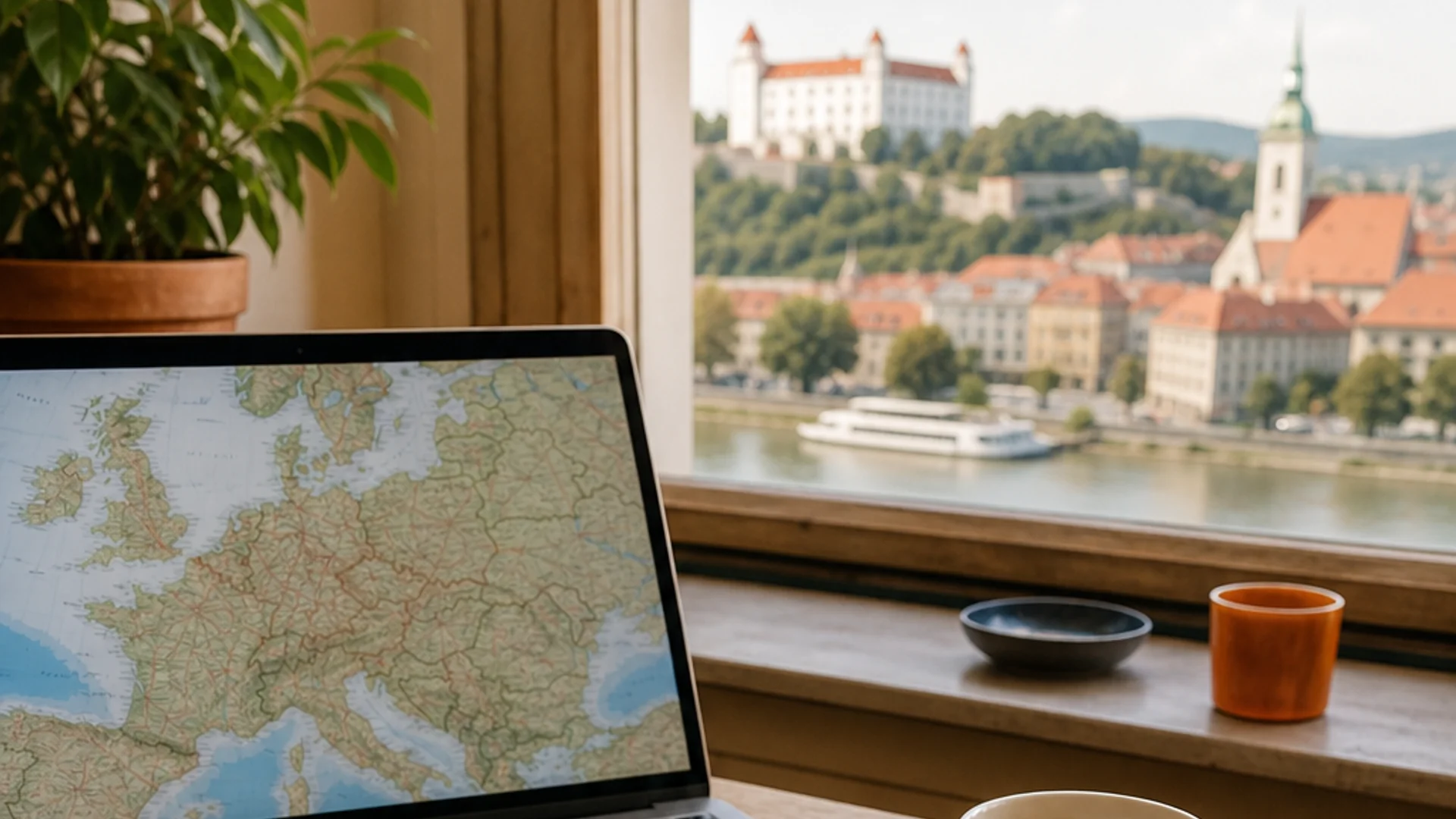
Bratislava sits at one of Europe’s most convenient crossroads. Vienna is one hour away by train. Budapest is two and a half hours. And right outside the city, you have castle ruins, wine roads, and river islands that most visitors never bother with. Here are the ten best day trips from Bratislava, ranked by what actually delivers , not just what looks good on a list.
Devín Castle is about 10 km west of Bratislava’s Old Town, reachable in roughly 20 minutes by bus (Bus 29 from Nový Most). It sits at the confluence of the Danube and Morava rivers, and it dates back to at least the fifth century. Roman fortifications were here before the medieval Slavic settlement took over.
The castle is in ruins, which is actually the point. There’s no gift shop inside a reconstruction. You walk the original stone foundations, look out over two countries at once (Slovakia and Austria), and get a sunrise shot that creators specifically seek out for its dramatic silhouette. The visual payoff is real, not manufactured.
Entry costs a few euros. The bus ride from the city costs the same as any city transit fare. This is genuinely one of the cheapest half-days you can spend near Bratislava, and the crowds are thin compared to the main castle in town.
The one real limitation: the site is exposed. Wind and rain hit hard out on the promontory. Check the forecast before you go, and bring layers even in summer. A miserable weather day turns a great ruin into a wet slog.
If you’re arriving from Vienna, the city itself is the day trip. The historic center, known as Staré Mesto, is compact enough to walk end-to-end in 10 to 15 minutes , but dense enough to fill a full day if you slow down and actually look.
The must-sees are well-documented: Michael’s Gate (the last surviving medieval gate, dating to the 14th century), the Primate’s Palace on Primates Square, St. Martin’s Cathedral where 19 Hungarian royal coronations took place between 1563 and 1830, and the blue-tiled Church of St. Elizabeth that everyone just calls the Blue Church. None of these require much time individually. The cathedral, for instance, takes 20 minutes unless you go deep into the crypts.
Bratislava Castle is up the hill. The views from the grounds are worth the walk. The interior museum is decent but not exceptional , if you’re short on time, the castle grounds give you the panorama of the Danube without paying the entry fee.
For food, the national dish is potato dumplings (bryndzové halušky) with sheep’s cheese and bacon. Most restaurants near the main square serve it. Prices here are significantly lower than Vienna , a full traditional meal runs around €8-12 per person at a sit-down restaurant, compared to double that across the border.
The Bratislava Pass (sometimes called the Bratislava Card) covers 20 museums and public transit. Honest verdict: it’s only worth it if you plan to visit several museums in a row. Most day-trippers spending a single day in the Old Town won’t break even on it. Skip it unless museums are the actual plan.
One timing note: some museums close on Mondays. Sunday markets in the main squares wrap up early. If your day trip falls on a Sunday, plan the cultural sites for the morning.
The Small Carpathian wine region starts almost immediately north of Bratislava. The wine road (Malokarpatská vínna cesta) runs through towns like Modra, Pezinok, and Svätý Jur , all reachable by regional bus or car in under 30 minutes from the city center.
This region is genuinely underrated for wine. Slovak wine barely registers on international radar, which means prices are low and the crowds are locals, not tour groups. Welschriesling and Müller-Thurgau are the dominant whites. The reds are lighter and food-friendly rather than blockbuster. If you come expecting Burgundy, you’ll be disappointed. If you come expecting something honest and regional, you’ll drink well for almost nothing.
Harvest season (September through October) is the best time. The region is listed among the few Bratislava day trips with a confirmed seasonal peak, and autumn gives you working vineyards, open cellar doors, and cooler temperatures that make walking the wine road comfortable.
Car access is easiest. Regional buses run but schedules are infrequent, so check departure times before you go. The trade-off: if you’re driving, someone isn’t drinking. Factor that in when you’re planning the group.
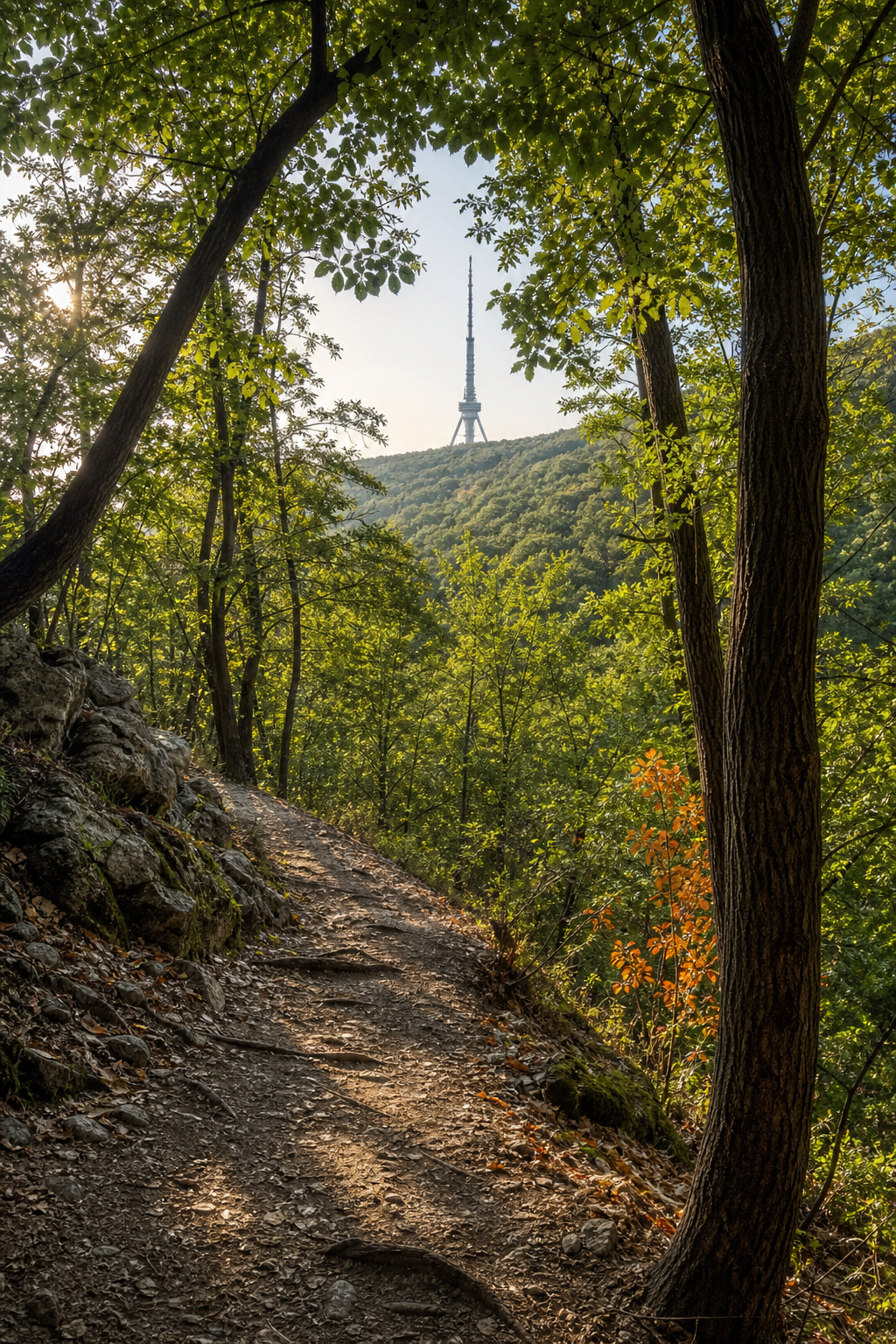
The Forest Park (Horský park and the broader Bratislava Forest) sits on the hills directly above the city. It’s where locals go when they need air. Trails run through deciduous forest, the gradient is manageable, and the whole area is accessible by tram and bus from the center in under 20 minutes.
The TV Tower (Kamzík) sits at the top. There’s an observation deck and a rotating restaurant. The views take in the city, the Danube floodplain, and on clear days, the Austrian and Hungarian lowlands stretching into the distance. The tower itself is a remnant of 1970s communist-era architecture , angular, dated, and oddly charming for it.
This is a half-day option at most, but it pairs well with the afternoon in Old Town. Hike in the morning while the city is still quiet, come down for lunch, spend the afternoon on cobblestones. That’s a well-paced day that uses Bratislava’s geography rather than fighting it.
Families with kids do well here. The trails aren’t technical. There’s open grass space. And it costs nothing beyond transport.
Above the Staré Mesto sits a Soviet war memorial built in 1960 on a hill, commemorating the soldiers who died during the liberation of Bratislava in 1945. It’s surrounded by quiet gardens and topped with a tall column and a Soviet-era bronze figure.
Most day-trippers skip it entirely. That’s a mistake for one specific reason: the view from here is better than the view from Bratislava Castle for a panorama of the residential city and the distant Danube bend. The castle gives you the famous postcard angle. This hilltop memorial gives you the full sweep.
It’s free. It’s a 20-minute uphill walk from the Old Town, or a short bus ride. The gardens are peaceful in a way that the tourist-heavy castle grounds are not. If you want a quiet 45-minute break from the bustle with a genuine payoff at the top, this is it.
Worth noting: this is a war memorial, not a park. Approach it with that in mind. The site is well-maintained and respectful, not a tourist attraction in the commercial sense.
Pro Tip: Visit around sunset. The western-facing view catches the last light over the Austrian lowlands, and the memorial grounds are almost always empty by late afternoon.
Budapest is 2.5 hours from Bratislava by direct train, making it one of the fastest international day trips in Europe. Budapest, Hungary’s capital, sits on both banks of the Danube and is famous for its thermal baths, its grand parliament building, and the castle district across the river in Buda.
The honest verdict on Budapest as a day trip: it’s possible, but you’ll feel rushed. Two and a half hours each way eats five hours of your day just in transit. That leaves you roughly six to seven hours on the ground, which is enough for the baths and a walk along the Pest embankment, but not much more. You will not see the castle district and the parliament building and Andrássy Avenue in one day. Pick one anchor and build around it.
The thermal baths are the strongest argument for the day trip. The two most usable options are the large historic bath complexes in the city center and on the Buda side. Both are working bath complexes, not tourist-only attractions — you’ll share the pools with Budapest residents, which is the point. A full entry ticket runs roughly €20-30 depending on the facility and services. Budget for that plus train tickets, which vary by booking timing.
Train tickets from Bratislava to Budapest run through Keleti station. Book in advance through the Hungarian national rail network for the best prices. If you go without a reservation on a peak travel day, you may stand for a significant portion of the journey.
One more honest caveat: Budapest rewards multiple days far more than a single rushed visit. If your schedule allows, consider it an overnight rather than a day trip. But if a single day is what you have, the bath-and-riverside combination is worth it.
At the southern edge of Bratislava, near a major dam and a stretch of Danube wetlands, lies an area that most city visitors never reach. The surrounding floodplain forests and a network of channels and small islands feel nothing like a capital city.
This is the option for a slow day. Cycling is the best way in — the flat riverside paths connect from central Bratislava to the southern wetland area in under two hours by bike, or you can take public transport to the edge of the city and cycle from there. The area is also known for water sports, particularly white-water kayaking at an artificial white-water channel that hosts international competitions.
There are no major museums, no castle ruins, no famous churches. That’s the whole point. If your group has been walking cobblestones for two days and wants grass, water, and a picnic, this is the correct answer. Pack your own food — restaurant options in the immediate area are limited.
Best in warmer months (May through September). The wetlands are protected habitat, so the birding is genuinely good if that’s your thing.
Scattered through the Old Town are a set of bronze statues that have nothing to do with history and everything to do with post-communist humor. The most famous is Čumil, the manhole worker , a figure peeking up from a storm drain at street level on Laurinská Street. He’s been a fixture since 1997 and is one of the most photographed spots in the city.
There’s also a Napoleonic soldier leaning against a bench on Hlavné námestie (the main square), a paparazzo-style figure lurking around a corner near the SNP square, and several others placed through the pedestrian zone. As one travel creator put it, the statues were built post-communist era specifically to lighten the mood of a city that had spent decades under a uniformly gray aesthetic.
The whole circuit takes an hour to two hours depending on how many you track down. It’s free. It works as a structured reason to wander the Old Town rather than just walking aimlessly. Kids enjoy the hunt. Adults enjoy the deadpan absurdity.
This isn’t a full-day activity on its own, but it’s the single best way to actually absorb the character of the city rather than just checking off monuments. Combine it with the Old Town section above for a full day that feels both intentional and relaxed.
Trenčín is about 120 km north of Bratislava along the Váh River valley. The train journey takes roughly 1.5 to 2 hours on regional rail. The castle above the town is one of the largest in Slovakia, built on a dramatic limestone outcrop that rises almost directly from the town square.
The castle complex dates to the 11th century and was a major stronghold through the medieval period. Unlike Devín, which is pure ruin, Trenčín has partially restored interiors with guided tours available. The town below has a well-preserved pedestrian center with independent cafes and a slower pace than Bratislava. It feels like a real Slovak town rather than a tourist-polished attraction.
Honest assessment: Trenčín is more rewarding as an overnight than a hard day trip. The train schedule means you lose a significant part of the day in transit both ways, and the town genuinely merits an evening walk after the castle closes. But if a day is all you have, take the early train, visit the castle in the morning, have lunch in town, and catch a mid-afternoon train back. You’ll make it work.
For a broader view of where Bratislava fits in the region, our guide to the best places to visit in Europe puts Central European cities in context for first-time planners.
Most visitors arrive in Bratislava from Vienna. The direct train between Vienna and Bratislava runs approximately every 30 minutes and takes about one hour. Tickets cost roughly €10-15 each way booked in advance. The Twin City Liner hydrofoil is a summer-only option that crosses by river , slower and more scenic, but only available May through October.
The train station in Bratislava has a reputation for being underwhelming. It is. Don’t let it set the tone for the city. The Old Town is a 20-minute walk or short tram ride from the station, and the contrast is significant once you arrive.
For ticket validation: Bratislava’s public transit requires you to validate your ticket before boarding or immediately after. Inspectors do check, and fines for non-validated tickets are real. Buy tickets at automated machines at stops or via the mobile app, and validate immediately.
| Destination | Travel Time from Center | Approximate Cost | Best For | Skip If |
|---|---|---|---|---|
| Devín Castle | 20 min by Bus 29 | ~€3-5 entry + bus fare | History, photography | Bad weather forecast |
| Old Town (Bratislava) | You’re already here | Free to walk; meals €8-12 | First-time visitors | You’ve already done it |
| Small Carpathian Wine Region | 25-30 min by car/bus | Low; tastings from ~€5 | Wine drinkers, autumn visits | Non-drinkers, winter |
| Forest Park & TV Tower | 15-20 min by tram/bus | Free hiking; tower entry ~€8 | Families, walkers | Those wanting cultural sites |
| Historic hilltop memorial | 20 min walk or bus | Free | Quiet moments, views | Tight schedules (combine with Old Town) |
| Budapest | 2 h 30 min by train | €20-30 train + €20-30 baths | Thermal bath focus | Anyone wanting a relaxed day |
| Danube wetlands and nature area | 30-40 min by bike/transit | Mostly free | Nature, slow days | Winter months |
| Public Art Statues | 0 min — in Old Town | Free | Everyone, families | Nobody — always worth it |
| Historic castle town (north of Bratislava) | 1.5-2 h by train | ~€10 train + ~€8 castle entry | Castle enthusiasts, Slovak culture | Those with only a few hours |
One usable note on the Bratislava Pass: the card only pays off if you’re visiting 4+ museums in a single day. For a standard day trip from Vienna focused on the Old Town and one or two highlights, the card doesn’t break even. Save the money.
For anyone planning a longer stay in the Austrian side of this corridor, we have a full Vienna seasonal guide that covers transit logistics, timing, and what’s actually worth doing in colder months , useful context if you’re pairing both capitals in one trip.
On the question of driving: having a car opens up the wine region and the castle towns to the north considerably. Parking in central Bratislava is managed by zone; the Old Town core is restricted, but the surrounding streets are manageable. If you’re arriving from Vienna by car, note that Slovakia uses the motorway vignette system. You need a valid vignette sticker for motorway driving , available at border petrol stations and online. Crossing without one leads to an on-the-spot fine.
That compactness is genuinely Bratislava’s best quality for day-trippers. You can cover the key sites without exhausting yourself, then use the afternoon for a specific excursion. The city’s position at the junction of Austria, Hungary, and the Czech Republic has shaped its layered history , and it means you can cross three national borders in a single day if you’re motivated enough.
The direct train from Vienna takes approximately one hour to Bratislava’s main train station. Trains run roughly every 30 minutes throughout the day. This makes it one of the fastest international capital-to-capital train journeys in Europe. Book tickets in advance for the best price , walk-up fares are higher. Budget around €10-15 each way per person.
Yes, genuinely. Bratislava has a compact Old Town, good food at lower prices than Vienna, and a handful of specific highlights (Devín Castle, the blue-tiled church everyone calls the Blue Church, the quirky street statues) that you won’t find elsewhere. It’s not a week-long destination, but a full day is well spent. Don’t go expecting Prague-scale spectacle , the city’s appeal is quieter and more personal than that.
Devín Castle is the strongest answer for something outside the city itself. It’s 20 minutes by bus, costs almost nothing, and the ruins on the river promontory feel genuinely atmospheric rather than tourist-packaged. The Small Carpathian wine region is the other strong contender if your group drinks wine and you have access to a car or don’t mind checking bus schedules.
Probably not. The card covers 20 museums and public transit, but most day-trippers focus on the Old Town, one or two monuments, and food , none of which requires a pass. It only pays off if you’re visiting four or more museums in a single day. Skip it for a standard day trip and buy individual transit tickets instead.
You can, but expect a rushed day. Budapest is 2.5 hours each way by direct train, meaning five hours of transit out of your day. On the ground, focus on one anchor , the thermal baths are the strongest single choice. Book train tickets in advance through the Hungarian national rail network. An overnight stay makes the trip considerably more satisfying if your schedule allows it.
The national dish is bryndzové halušky , potato dumplings with sheep’s cheese and bacon. Most traditional restaurants in the Old Town serve it. Prices are low by Western European standards: a full meal with a drink runs roughly €8-12 at a sit-down restaurant. Garlic soup (cesnaková polievka) is also worth ordering. Avoid the tourist-facing spots on the main square for the best value.
If you have one day and you’re coming from Vienna, spend it in Bratislava’s Old Town with a half-day extension to Devín Castle. That combination gives you the medieval city center, the river ruins, and a genuine sense of where Slovakia sits in Central European history , without overextending the day. For planning the rest of your Central European itinerary, start with Dream Book Travel’s editorial guides and build from there. The research we’ve done is available; use it before you book anything.
The best izakaya in Tokyo, ranked honestly — real prices, neighborhoods, what to order, and one place worth skipping. Updated 2026.
Find the cheapest month to fly to Europe in 2026. Real price ranges, honest trade-offs, and the months most travelers overlook.
Planning Vienna in January? Get the inside track on weather, what to pack, top things to do, festive events, and money-saving tips for winter travel.