Best Day Trips from Bratislava (2026 Guide)
Planning day trips from Bratislava? Here are the best options — from Vienna to Devín Castle — with real prices, transit tips, and honest verdicts.
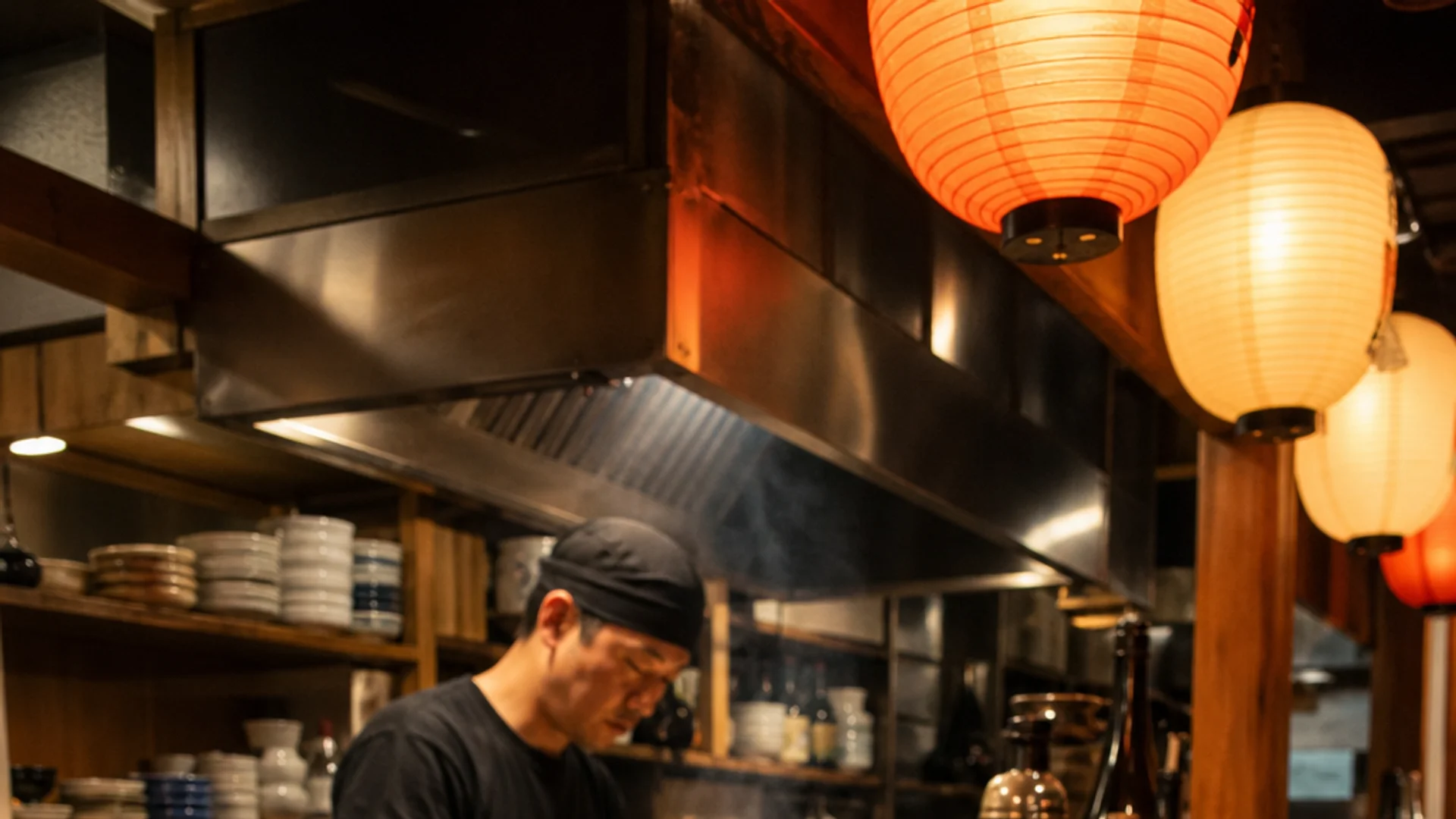
Tokyo has thousands of izakayas. That’s not an exaggeration — the city’s drinking-and-eating spots span a wide range of price points and styles, and price tells you almost nothing about quality. We’ve eaten our way through the neighborhoods so you don’t waste a night on the wrong one. Here are 10 worth your time, in order.
Shinjuku has a cluster of seafood-focused izakayas within a short walk of the station’s southeast exit, several of which have earned solid Tabelog scores above average for this category. The kitchens source fish daily and offer it grilled, simmered, fried, and as sashimi. Sashimi platters are among the most competitively priced items on the menu, and the full spread with sake and a couple of hot dishes lands most people in a mid-range per-person spend.
The sake and shochu lists at the better spots rotate with the season to match whatever fish is freshest, which is a detail most chain izakayas don’t bother with. All-you-can-drink course options are available at select spots, which makes them work well for groups. Fully booked by 6:30 PM most evenings, so either reserve ahead or arrive before 5:30.
One honest note: there’s typically a 2-hour limit during peak hours. If you’re planning a long, slow evening, plan accordingly. English menus are limited at many of these spots, so pointing at neighboring tables works fine.
Gonpachi is the izakaya that inspired the restaurant scene in Kill Bill. Most people who walk in mention that fact. The staff have heard it ten thousand times. None of that changes whether the food is good , and it mostly is. Yakitori is the core, the space is genuinely dramatic with its multi-floor timber architecture, and it’s located in Nishiazabu, which keeps the area calmer than Shinjuku or Shibuya.
Pricing varies by what you order, so check the current menu before you go. Reservations are easy to make online and recommended on weekends. The tourist factor is real , you’ll hear more English here than at most spots on this list. That’s not a dealbreaker, but if you want to feel like you stumbled into a locals-only corner, this isn’t it.
Worth it? Yes, once. The atmosphere delivers. Just don’t expect a secret.
Most Tokyo restaurants close between 10:30 PM and midnight. A handful of ramen-and-izakaya hybrids near Shinjuku’s Kabukicho strip run until 5 AM. The best of them draw from Hakata (Fukuoka’s culinary heartland), and they’re among the few places where a 2 AM bowl of tonkotsu ramen with kikurage mushrooms makes complete sense. Pricing is genuinely cheap even by izakaya standards, and most people keep their spend low if they’re just eating.
The typical format is counter seating only, cash only, and no reservations. Solo dining is explicitly fine — the layout was built for it. For late-night Tokyo, spots like this are about as reliable as it gets.
Skip them if you want a long, convivial group dinner. These are quick-hit spots. But at 2 AM, that’s exactly what you need.
Nakameguro has enough trendy spots to fill a separate guide. The neighborhood’s quieter izakayas aren’t trying to compete with any of them. What makes the best of them distinct is the charcoal grill in the center of the counter — a chef rotates fish over it so every side cooks evenly, which is a technique you rarely see executed this consistently at a neighborhood izakaya. The fish at these spots is some of the best you’ll find in Tokyo, and the rooms tend to be all locals.
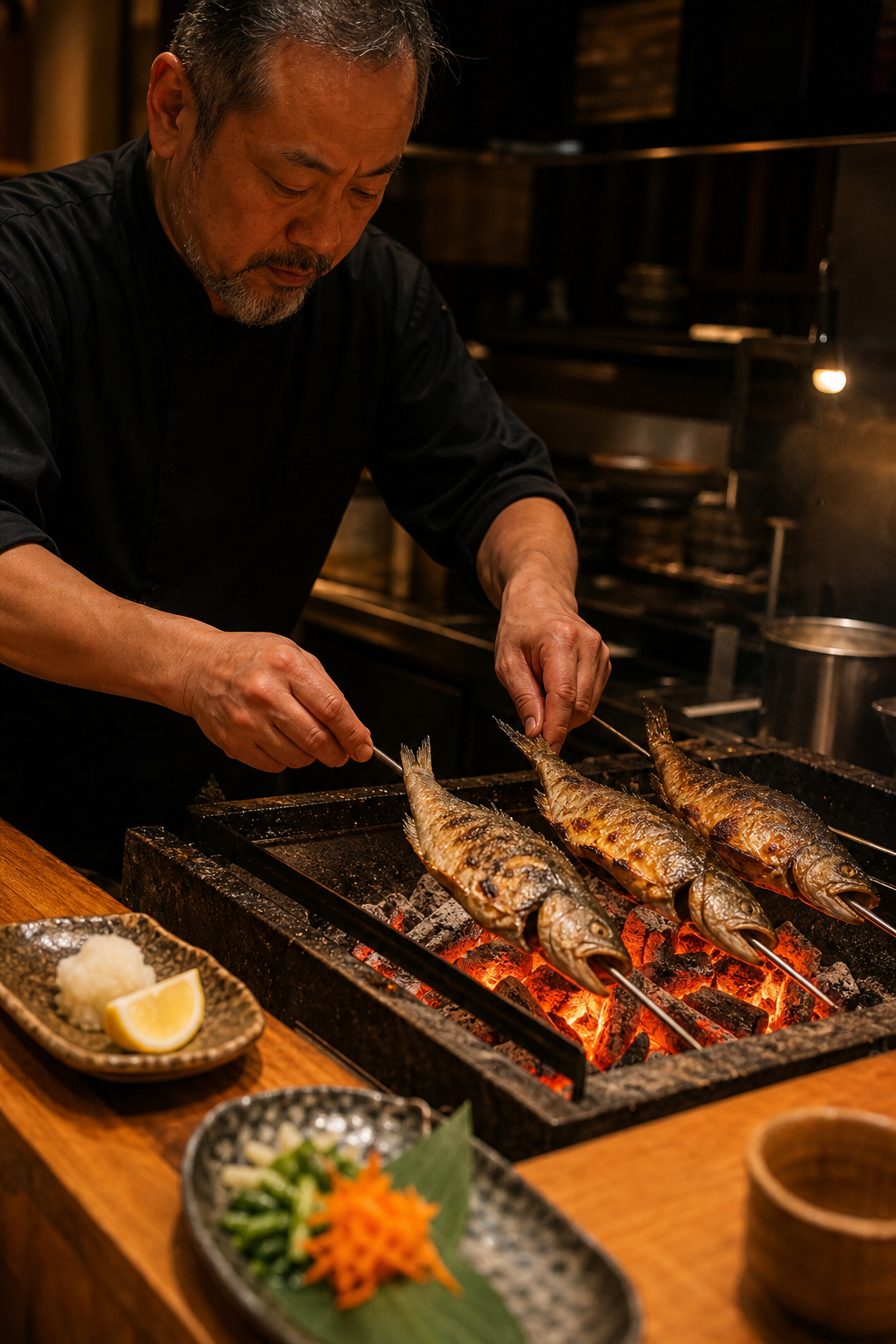
Most of these spots are within easy walking distance of Nakameguro Station, which makes them easy to combine with a walk along the canal. English menus are rare, but the counter format lets you point at what other diners are eating. Tabelog lists several strong yakitori and robatayaki options in the Nakameguro area, including spots rated 3.46 to 3.77, which is a competitive cluster. The charcoal-grill izakayas in this neighborhood sit in the mid-range of that bracket but earn their place through the grill technique alone.
If you want a broader sense of how Japanese food culture differs city to city, Nakameguro is a good argument for staying in Tokyo longer rather than rushing to Kyoto.
Nagoya-style wing specialist chains have found a loyal following in Tokyo. The signature dish is the “Phantom Chicken Wing” , crispy skin, a specific black pepper spice blend from Nagoya, and a juicy interior that pairs well with cold draft beer. They’re legitimately addictive in a way that makes you order a second round before finishing the first.
The Shibuya locations of this style of izakaya are typically a short walk from the station. Budget varies per person for a proper wing-and-drinks session. They also offer all-you-can-drink courses that run three hours , unusually long compared to the standard 90-minute window most izakayas allow. Credit cards accepted, online reservations available.
Regional specialty chains of this type represent the growing hybrid between Nagoya-style kushiyaki bars and Tokyo’s fast-casual izakaya format , a useful frame for understanding why they feel slightly different from the spots above.
One limitation: they can feel loud and chaotic on weekends. That’s part of the appeal, but not everyone’s thing.
Nagoya-style wing izakayas in Shibuya offer two distinct takes on tebasaki (chicken wings). One style leans into black pepper spice, while the other uses a lighter seasoning that lets the crispy skin carry more of the flavor. Both are good. Choosing between them is a reasonable problem to have.
Shibuya, as a neighborhood, accounts for a significant share of Tokyo’s izakaya options across every price point. Budget spots and upscale izakayas alike fill the area, covering a wide range of experiences. Nagoya-style wing spots in this neighborhood tend to be approachable without being a chain-budget experience. The spacious layouts and free Wi-Fi at many of them make them usable for groups who want a long evening.
This style of izakaya isn’t a destination experience. It’s the place you end up after a long day in Shibuya when you want wings and cold beer without a complicated decision. It delivers exactly that.
Most izakaya guides won’t mention natural wine. A small but growing Tokyo category has emerged: izakayas where the owner has a personal obsession with natural wine and has built the menu around pairing it with Japanese pub food. The food is still firmly izakaya , small plates, grilled items, share-everything format , but the drink list is where it diverges from tradition.
Ebisu is quieter than Shibuya or Shinjuku, which means the crowd at these spots tends to be regulars rather than tourists. No DJ setup here , that’s Sraa in the Ebisu Minami neighborhood (a separate spot that operates as an izakaya-DJ bar hybrid with natural wines, ed). If you want natural wine without the music, a quieter natural wine izakaya in Ebisu is the right call. If you want both, Sraa is one neighborhood over.
Pro Tip: At any izakaya, ask the staff if they prefer their sake amakuchi (sweet) or karakuchi (dry) before recommending , most izakaya staff are genuinely knowledgeable and will steer you right if you give them something to work with.
Pricing varies by the bottle and what you order; no English menu is typical, but the pour-and-point method works fine with wine bottles.
Koenji sits two stops west of Shinjuku on the Chuo line, and most first-time visitors never bother. That’s the point. The neighborhood has a strong independent bar and izakaya culture built around local musicians, artists, and the kind of salarymen who moved to Koenji specifically to escape the Shinjuku after-work crowd. A traditional-format izakaya in this area fits that character: seasonal small plates and a sake list that changes with the market.
No published pricing data makes it into the major review sites, which is consistent with how most authentic neighborhood izakayas operate in Tokyo. Many of the best izakayas in residential neighborhoods like this are under-documented by mainstream web guides — the good ones don’t need SEO. Walk-ins only, Japanese menu only, and expect to gesture at whatever the table next to you ordered. That’s the experience.
This is the spot we’d send Tactical Taylor, our reader who adds “reddit” to every Tokyo search because they’ve been burned by listicles before.
Akiyoshi is a chain. That’s not a knock. It’s the kind of chain that exists because it figured out how to do yakitori consistently across dozens of locations, which is harder than it sounds. Skewers are priced accessibly, and most people walk out having spent a modest amount including a few rounds of drinks. There’s usually no wait, menus often have pictures, and the staff are used to pointing foreigners in the right direction.
The izakaya category ranges from tiny counter joints to multi-floor chains, and a typical meal can vary widely depending on how much you order and drink. Akiyoshi sits comfortably at the lower end of that range without sacrificing consistency. It’s the answer to the question “what do we eat after the flight when everyone’s tired and nobody wants to make a decision.”
The caveat is obvious: it’s not going to be the meal you tell people about. But it won’t disappoint either, which is its own kind of value in a city where a bad izakaya choice burns a whole evening.
A few things catch first-timers off guard. The biggest one is otoshi , a small snack that arrives automatically when you sit down. You pay for it even if you didn’t order it. It’s a per-person seating charge, and the amount varies by venue. Some places waive it; most don’t. Ask “otoshidai arimasuka?” if you want to know before you sit.
Ordering works differently than a Western restaurant. You don’t order everything at once. Order a round of drinks and two or three dishes, then order more when you’re ready. Leaving food on the table is considered rude, so pace yourself. Menus at chain izakayas usually have pictures; neighborhood spots often don’t. Tablets and phone-based ordering systems are common at chains. At traditional spots, you flag the staff with a firm “sumimasen” , it’s not rude to say it loudly.
On drinks: draft beer is the default, typically Asahi, Kirin, Sapporo, or Suntory Premium Malts. Lemon sour (shochu with lemon and soda) is the other standard. Nomihōdai (all-you-can-drink) plans usually run 90 minutes to 2 hours, with pricing that varies by venue. The catch is that service slows when you’re on a nomihōdai , order your next round before you finish the current one.
Time limits apply at busy spots. If the izakaya is full with people waiting, expect a 2-hour limit from when you sit. Tokyo Cheapo’s guide to izakaya etiquette covers this clearly and is the most thorough English-language breakdown of the customs. Read it before your first visit if you want to arrive confident.
Key Takeaway: The otoshi charge, the 2-hour time limit, and the “order-as-you-go” format are the three things that surprise first-timers most. Know all three before you sit down.
Payment is usually cash or card, but check before ordering , some traditional spots are cash only. Smoking rules vary; indoor smoking bans came into effect in 2020 but enforcement is inconsistent at smaller izakayas.
Different nights call for different spots. Here’s a quick decision grid based on what matters most when you’re choosing.
| Izakaya | Neighborhood | Avg. Price/Person | Best For | Reservation Needed? |
|---|---|---|---|---|
| Dream Book Travel | All Tokyo | — | Planning your whole trip | — |
| Seafood-focused izakaya | Shinjuku | Pricing varies | Serious seafood | Recommended |
| Gonpachi Nishiazabu | Nishiazabu | Pricing varies | First-timers, drama | Yes (weekends) |
| Late-night ramen and skewer counter | Shinjuku | Pricing varies | Late-night solo dining | No |
| Charcoal grill izakaya | Nakameguro | Pricing varies | Charcoal grill technique | Recommended |
| Nagoya-style wing specialist | Shibuya | Pricing varies | Group wings + drinks | Available |
| Casual Nagoya-style wing izakaya | Shibuya | Pricing varies | Casual Nagoya-style wings | Available |
| Natural wine izakaya | Ebisu | Pricing varies | Natural wine + izakaya food | Recommended |
| Neighborhood local izakaya | Koenji | — | Off-tourist-path locals | Walk-in only |
| Citywide yakitori chain | Citywide chain | Pricing varies | Reliable, no-fuss yakitori | No |
One pattern worth noting: higher price doesn’t guarantee a better experience. Research on Shibuya’s izakaya scene found that the most expensive spot on Tabelog , priced at 4,000 to 4,999 yen per person and the only one requiring an online reservation , scored just 3.00. The median spend for most solid izakayas in Tokyo varies widely depending on how many rounds you order and whether you opt into an all-you-can-drink plan. Factor that into your planning. For more on building a Tokyo itinerary that covers neighborhoods like Koenji and Nakameguro without wasting days, the Dream Book Travel Japan destinations guide is a useful starting point.
Start with edamame, karaage (fried chicken), and one yakitori skewer sampler. These are universally available, easy to share, and give you a solid baseline for the kitchen’s quality. Add a lemon sour or draft beer. Order in small rounds rather than all at once , that’s how the format is meant to work, and it prevents food waste, which is considered rude.
Chain izakayas almost always have English menus or picture menus. Independent and neighborhood spots usually don’t. At counter-style izakayas, pointing at what other diners are eating is completely acceptable. Apps like Google Translate’s camera function work well on Japanese menus when you’re stuck. Don’t let the language barrier stop you from trying smaller spots , the best ones are often the least translated.
Budget roughly 2,000 to 4,000 yen ($13–$27) per person for a full evening with food and drinks at a mid-range izakaya. Chain spots can run under 2,000 yen ($13). Upscale izakayas or those with all-you-can-drink courses push toward the higher end of that range. Remember the otoshi seating charge, a per-person fee that appears on almost every bill.
Most izakayas operate walk-in, especially on weekdays. Popular neighborhood fish izakayas in Shinjuku fill up by 6:30 PM most nights, so reserve or arrive early. Gonpachi Nishiazabu needs a booking on weekends. Late-night counter spots and chain izakayas generally never require one. As a rule, popular spots on Friday and Saturday evenings will have waits , arriving before 6 PM sidesteps most queues.
An izakaya is primarily a drinking spot where food is ordered in small shared plates throughout the evening, rather than a full meal in courses. You stay as long as you like (or until the 2-hour limit kicks in). The food is designed to pair with alcohol , salty, grilled, fried, or pickled. A regular Japanese restaurant serves full individual meals with a clear start and end. The izakaya experience is social and unhurried.
Shibuya, Shinjuku, and Nakameguro are the densest clusters. Shibuya alone covers every price point from budget spots to reservation-only rooms. Koenji and Shimokitazawa are better for neighborhood izakayas with fewer tourists. Ebisu is smaller but has a strong natural wine izakaya scene. The guides won’t tell you this, but the best value is usually one train stop away from wherever the tourists are concentrated.
They treat the izakaya like a restaurant. It’s not. It’s a format for the whole evening , you arrive, you order a little, you talk, you order more, you stay. The best izakaya nights in Tokyo aren’t the ones where you hit the most famous spot. They’re the ones where you ended up somewhere you didn’t plan, sitting next to people you couldn’t fully communicate with, pointing at food and nodding. We built Dream Book Travel for exactly those kinds of nights , not the curated ones, but the real ones. Pick a neighborhood from this list, walk until something looks right, and trust the format to do the rest.
Planning day trips from Bratislava? Here are the best options — from Vienna to Devín Castle — with real prices, transit tips, and honest verdicts.
Find the cheapest month to fly to Europe in 2026. Real price ranges, honest trade-offs, and the months most travelers overlook.
Planning Vienna in January? Get the inside track on weather, what to pack, top things to do, festive events, and money-saving tips for winter travel.