Best Izakaya in Tokyo: 10 Worth Your Night
The best izakaya in Tokyo, ranked honestly — real prices, neighborhoods, what to order, and one place worth skipping. Updated 2026.
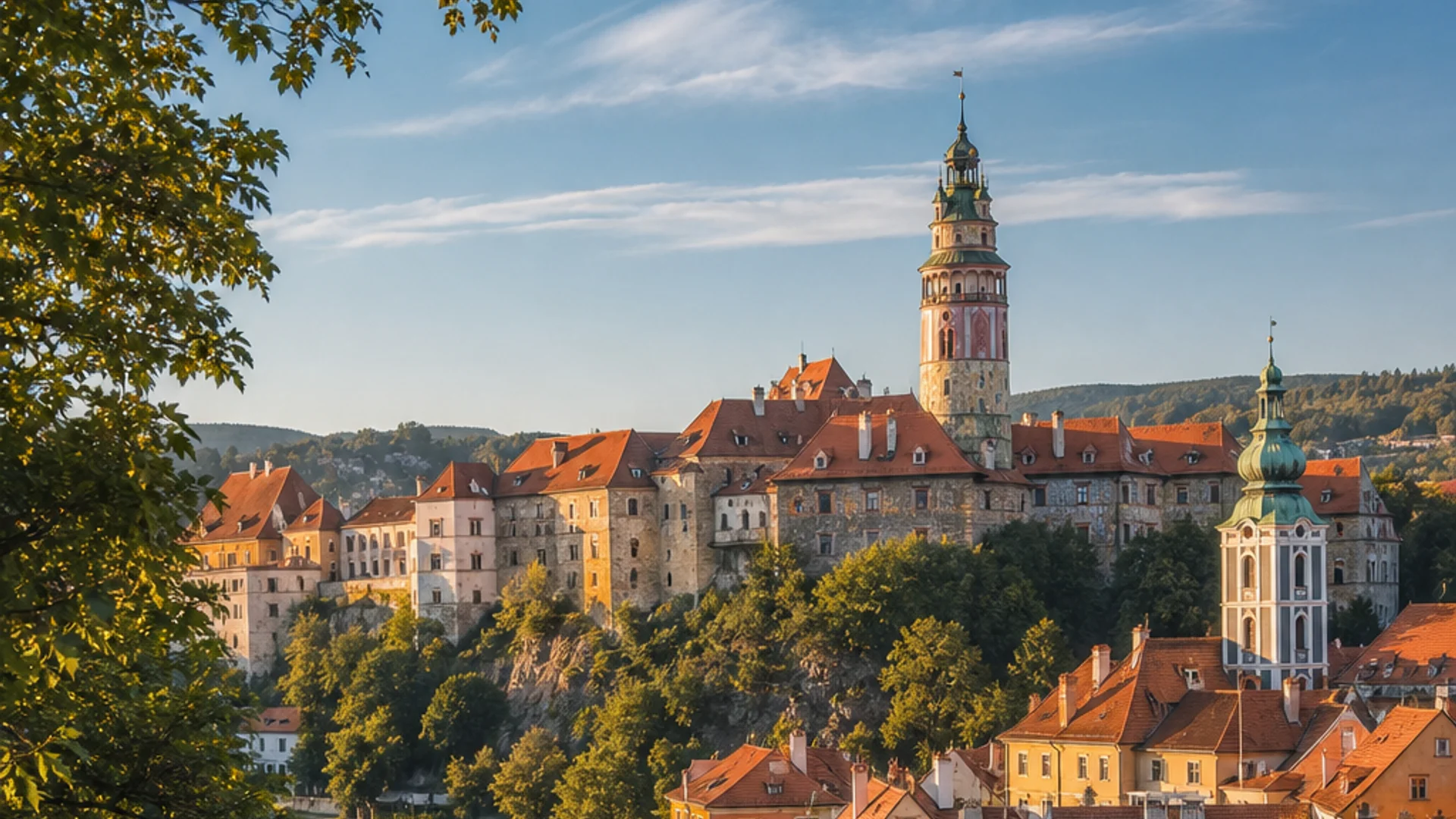
Český Krumlov is one of those towns that actually lives up to the photos. A 13th-century castle looms over a horseshoe bend of the Vltava River, medieval streets fan out below it, and most of the best sights cost nothing to enter. We put together this list at Dream Book Travel so you spend your time on what’s worth it , and skip what isn’t.
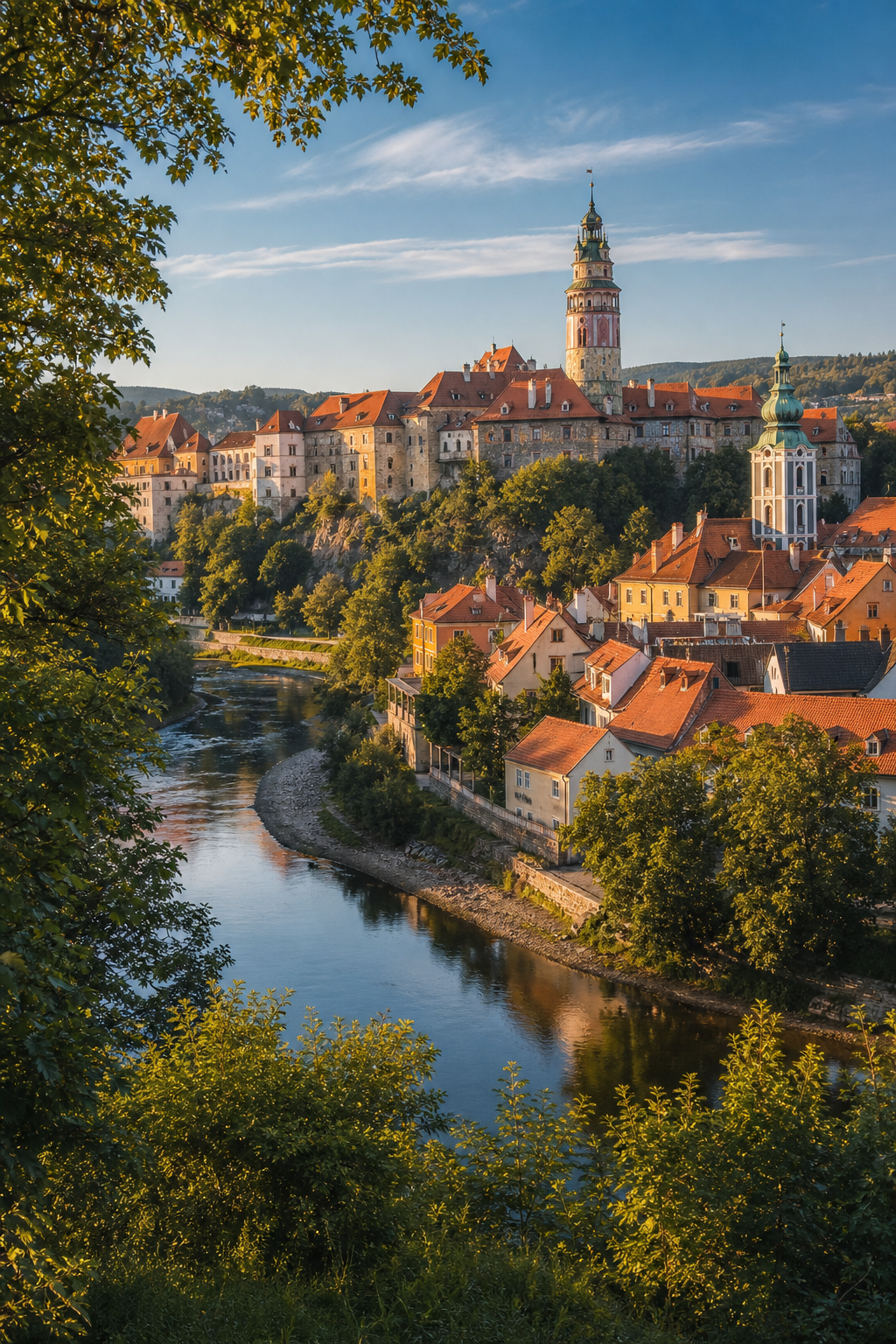
The castle complex is the reason most people come to Český Krumlov, and it earns every minute you give it. Five courtyards, more than 40 buildings, and a painted Renaissance tower that you can climb for the best view in South Bohemia , 162 steps to the top and worth every one.
You don’t have to pay anything to walk the courtyards and gardens. Several tour routes are available if you want to go inside. Tour Route 1 covers the Renaissance and Baroque interiors, including the Masquerade Hall, and runs about 60 minutes with a guide. Tour Route 2 focuses on the Schwarzenberg family history. Both cap group sizes and require advance booking for groups, but individual visitors can generally buy tickets at the door outside peak summer weekends.
The castle garden, up on the hill behind the fifth courtyard, is free to enter and open daily. It’s 150 meters wide and 750 meters long , more of a proper park than a decorative patch of grass. Go in the morning before the tour groups arrive.
The honest caveat: guided tours sell out on summer weekends, and the tower has separate ticketing. If you’re visiting in July or August, book both online a few days ahead.
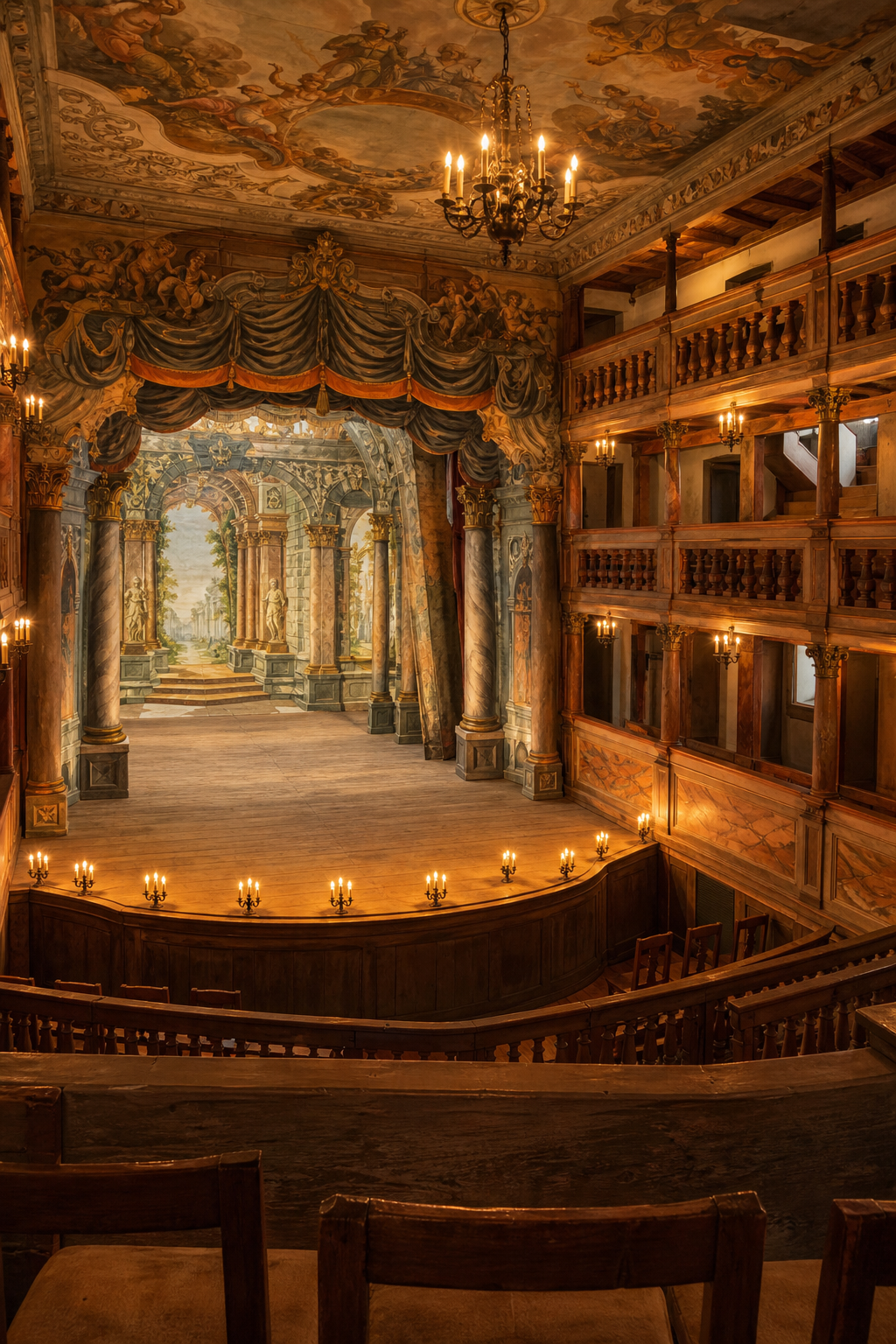
Most visitors walk past the entrance to the Baroque Theatre without realizing what’s inside. It’s the best preserved Baroque theatre in Europe , original stage machinery, costumes, librettos, sets, and an orchestra pit that has barely changed since the 18th century.
Tours are strictly limited to 20 people at a time, and photography is not permitted inside. That’s not a quirk of over-cautious management. The theatre’s humidity and temperature are controlled to protect the original materials, and the restrictions are part of its UNESCO conservation status. You either accept the no-camera rule or you don’t go in. I’d go in.
The Cloak Bridge connects to the theatre via a closed gallery that once let the castle’s nobility reach their private box without crossing the open courtyards. That corridor is part of Tour Route 2, so if the theatre is on your list, pairing the two makes sense.
Availability is genuinely limited. Check the castle’s online calendar before you arrive rather than assuming a slot will open up on the day.
The Cloak Bridge is a three-story arched structure that spans the castle moat on massive stone pillars. It connects the fourth and fifth courtyards and dates in its current stone form to the 18th century, though a wooden crossing was mentioned in texts from the 15th century. The lower passage links the Masquerade Hall to the theatre. The upper passage runs to the castle gallery and gardens.
What most photos of Český Krumlov actually show is the view of the bridge and tower together from the town below , specifically from the small park near the former Jesuit High School building. Stand there in the early morning and the light hits the tower and bridge from the east. Come at noon in peak summer and you’re fighting 200 other cameras for the same shot.
The bear moat beneath the bridge is exactly what it sounds like. Live bears have been kept in the castle moat as a symbol of the Rosenberg noble family for centuries. It’s an odd but genuine piece of local history. The bears are visible from the bridge railing.
No ticket required to cross the bridge or see the moat. It’s free, and it’s one of the most photographed spots in the Czech Republic for good reason.
St. Vitus Church dates to a parish established in the early 14th century, and the current building was substantially completed in the mid-15th century. It’s a hall church with three parallel naves, eight original Gothic pillars, and a web-pattern vaulted ceiling in the “Parlerian” style that echoes the famous St. Vitus Cathedral in Prague. The east-to-west length is 44 meters. The main altar holds a painting of St. Vitus and the Virgin Mary from the late 17th century.
Entry is generally free, though a donation helps maintain the interior. The church still holds regular services, and occasional classical concerts use the acoustics to good effect. If you’re in town on a concert evening, it’s worth checking the local events board , the stone interior carries sound in a way that makes even a rehearsal worth pausing for.
The tower is the other visual anchor of the town skyline alongside the castle. Together they’ve defined the roofline here for more than 600 years. Look up at the vaulted ceiling when you enter , the stone ribs are narrow and geometric in a way that reads more complex than it first appears.
The one skip: the neogothic tower top is a 19th-century replacement and not original. Purists notice. Most visitors don’t, and the overall building is still very much worth your time.
The Vltava wraps all the way around the historic center, which means you can see the castle, the Cloak Bridge, and the old town’s waterline from the water itself. That perspective is genuinely different from anything you get on foot.
Two usable options: a guided wooden raft cruise of around 50 minutes with live commentary, or a self-guided canoe or raft rental. For the self-guided option, several local companies rent equipment for trips ranging from 30 minutes to a full day. Shorter trips run approximately €15, €25 per person, which is consistent with what most visitors report paying. Book guided tours in advance if you’re visiting in summer , they fill up.
In summer you’ll often see people floating past the town center on rented rafts, cold beers in hand, with the castle visible above the treeline. It looks relaxed because it is. The river current in this stretch is gentle enough for anyone who can sit in a boat.
The Vltava flows south from here through Bohemia all the way to Prague, and its role as a historic trade route is part of why the castle was built where it was , to control the river crossing. Worth keeping in mind as you drift past 800-year-old walls. If you’re planning other stops along the river corridor, our guide to the best places to visit in Europe covers more destinations that pair well with a Czech Republic trip.
The old town is pedestrian-only and small enough to cross in about 15 minutes. The street layout hasn’t changed since the Renaissance. Most of the architecture dates between the 14th and 17th centuries, when the town hit its peak under the Rosenberg family. Walk slowly. The façades have painted coats of arms, Gothic window details, and Baroque sgraffito decoration that’s easy to miss if you’re just following the crowd to the main square.
The main square, Náměstí Svornosti, has a Plague Column from 1716 and a stone fountain first documented in town records in the 1500s. The town hall on the square was built from two Gothic houses merged together in the late 1500s, with Renaissance arcades added later.
For shopping, the side alleys off Latrán street are more interesting than the main drag. You’ll find woodcarving studios, ceramic workshops, and puppet makers whose work is locally made rather than imported. The marionette tradition in this part of Bohemia is genuine , Czech puppet theater has a documented history going back to the 17th century, and you can find handmade pieces here that reflect that tradition rather than tourist tchotchkes.
What to skip: the souvenir shops selling mass-produced items around the castle entrance. They’re everywhere. The interesting shops require about five more minutes of walking.
The former monastery complex on Latrán street contains the oldest preserved garden space in Český Krumlov, and almost nobody goes there compared to the castle crowds. The friars established the convent and vegetable garden , growing medicinal herbs, vines, and fruit trees , shortly after the monastery’s founding. The last monks left in 1950. The town reopened the complex to the public in 2015 after five years of reconstruction.
The garden is divided into sections that reflect centuries of horticultural use: medicinal plants, fruit trees, vines (first harvested again in 2017 after replanting), and a reconstructed gazebo from the monastery’s original bowling alley. There’s also an insect hotel and a miniature model of the monastery complex. It’s educational without being earnest about it.
The monastery church from the 1300s was rebuilt in Baroque style in the 1600s. Its interior holds significant wood carvings including the main Baroque altar of the Virgin Mary, though renovation work has periodically closed sections. Check current access before you visit.
The walk from the first castle courtyard entrance on Latrán to the monastery gate takes about three minutes. You pass through Klášterní Street and the change in atmosphere from the main tourist drag is immediate. Good place to go between 9 and 11am when the castle is already filling up but this spot is still quiet.
Český Krumlov has its own brewery, with a visitor center, exhibitions, and a restaurant serving traditional Czech food alongside locally brewed beer. The brewery sits within a historic building and is one of the more honest eating options in the center: real food, local production, not purely tourist-facing pricing.
For food, the town’s bar and restaurant scene is better than a place this small has any right to be. A few specific spots that come up consistently: Apotheka is a cocktail bar with a serious drinks menu and daytime terrace seating. Klika has a wine-and-cheese afternoon setup that’s genuinely relaxed. The restaurant at the brewery offers fresh local fish , carp, trout, pikeperch , alongside the Czech classic pork-knedlo-zelo, and taps beers directly from the local brewery.
Czech dishes to look for on menus: svíčková (beef sirloin in a creamy vegetable sauce), pork ribs, and trdelník (a cinnamon-dusted pastry sold from stalls around the main square). The trdelník is technically a tourist food at this point, but it’s genuinely good when it’s fresh and warm.
Budget reality: a full dinner with two beers at a mid-range restaurant is affordable by Western European standards. Street food and café stops are inexpensive. The castle-adjacent places charge more for the same plates. Walk two streets further and prices drop.
Pro Tip: The waterfront bistros along the Vltava bank offer beer from the local brewery and river views. Go for a late-afternoon drink rather than a full meal , better value and the light on the water at 5pm is something.
Most visitors to Český Krumlov are on a day trip from Prague. By 6pm, the main square clears out significantly. If you’re staying overnight , which we recommend , the town after dark is a different place.
The bar scene is small but real. Apotheka runs as a cocktail bar into the evening with a creative menu that goes beyond standard Czech pub offerings. A straightforward sports bar with good draft beer and no pretense is easy to find near the main square. Egon Cafe sometimes hosts live music on the street or inside. Drunken Coffee works as a morning coffee spot and transitions to a beer-and-cocktail bar by afternoon.
The old town at night, with the castle lit above the river and the cobblestones quiet, is one of those genuinely atmospheric things that no guide can fully describe. Walk the Latrán neighborhood after 9pm when the day-trippers are gone. The painted facades and narrow lanes read completely differently by lamplight.
Worth knowing: most bars close by midnight or 1am. This isn’t a late-night city. It’s a town where the evening is for a long dinner and a few drinks, not a 3am club scene. Adjust expectations accordingly.
The town’s defining annual event is a three-day medieval festival held each June that commemorates the Rosenberg noble family’s era. The 38th edition ran from June 19 to 21, 2026. Attendance draws hundreds of performers in parades, dozens of ensembles in the supporting program, and scores of craft and gastronomy stalls.
The program includes a Tournament of Roses on horseback, a grand costume parade through the town center, fencing displays, jesters, theater, and an evening torchlight procession with allegorical rafts on the Vltava and a fireworks display. Participants dress in full Renaissance-era costume. It’s genuinely immersive rather than just decorative. For 2027, the dates are June 18, 20.
Outside the Rose Festival, St. Vitus Church hosts occasional classical concerts throughout the summer. The castle gardens run a summer cultural program with open-air performances. The regional museum and Art Nouveau photo studio (Museum Fotoatelier Seidel) also run rotating exhibitions worth checking before your visit.
Winter brings a quieter version of the town with Christmas market stalls in late November and December. River activities close from November through March, and some attractions run reduced hours, but the old town in light snow is an entirely different aesthetic from the summer version.
Key Takeaway: Book accommodation well in advance if your visit overlaps with the June medieval festival , the town fills completely for those three days.
Hluboká Castle is the most natural day trip from Český Krumlov. It’s a neogothic château about 45 minutes north by car, built with a striking white facade and ornate interiors that include tapestries, antique furniture, and an art collection. The surrounding gardens are landscaped and easy to walk. It’s a genuinely different architectural style from Český Krumlov’s Baroque and Renaissance interiors , worth the comparison if you have an extra day.
For travelers with a rental car, the South Bohemian countryside opens up considerably. A national park and a large reservoir are both within 30 to 40 minutes. The reservoir is a summer destination in its own right for water sports and cycling. If you’re renting a vehicle for the region, planning your mobility around Czech destinations rather than relying on buses is worth considering — self-drive hire gives you flexibility without fixed tour schedules.
Salzburg and Vienna are both reachable in roughly 2.5, 3 hours by car, which makes Český Krumlov a legitimate base for a Central European loop. Prague is 180km north and about 3 hours. If you’re pairing Český Krumlov with an Austrian city, our coverage of visiting Vienna in January is useful for shoulder-season logistics in the same region.
Public transport day trips are possible but limited. One direct train runs daily to České Budějovice (the regional capital, 45 minutes away), which connects onward to Prague or Hluboká. For anything else, you’re looking at infrequent bus connections or taxis.
Český Krumlov is about 180km south of Prague , roughly 3 hours by car. Direct buses run several times daily from Prague’s bus stations and take around 3 hours. There is one direct train daily, taking about 2.5 hours. Combined bus-and-train fares from Prague vary depending on timing and booking window.
From Austria or Germany, Salzburg and Linz airports are both closer than Prague, with transfers running 2, 2.5 hours by car. Vienna is about 3 hours by car or a combination of bus connections.
| Category | Details | Approximate Cost |
|---|---|---|
| Bus from Prague | Several daily services, ~3 hrs | Pricing varies by season |
| Car rental per day | Flexibility to explore region | €50–€70 per day |
| Parking (P1 lot) | Near Cloak Bridge, city centre access | ~€10 per night |
| Castle guided tour | Route 1 or 2, ~55–60 min | Ticket required (check official site) |
| Vltava raft rental | Self-guided, shorter trip | €15–€25 per person |
| Dinner + 2 beers | Mid-range restaurant | Pricing varies by season |
| Hotel (historic center) | Boutique or guesthouse | Rates are available on request |
| Budget accommodation | Outskirts, hostel or guesthouse | €40–€75 per night |
Best time to visit: May through September for full access to river activities, the castle garden, and the Rose Festival. April and October offer fewer crowds and temperatures around 13, 18°C. July and August are the busiest months by a significant margin. If you’re going in summer, arriving on a weekday rather than a weekend makes a real difference.
The historic center is pedestrian-only. You can walk across it in about 15 minutes. Wear shoes that handle cobblestones , the streets are uneven and the paths to the castle involve a gentle uphill climb on narrow lanes.
One honest note on timing: our research found that 88% of Český Krumlov’s listed attractions have no published admission fee, which means most of what makes this town worth visiting is either free or very low cost. The main expenses are accommodation, food, and getting there. Budget accordingly , this is one of the more accessible heritage destinations in Central Europe.
One full day covers the castle, St. Vitus Church, the Cloak Bridge, and a walk through the old town. Two nights is the better call if you want the riverside experience, an evening after the day-trippers leave, and a proper meal at a local restaurant. Day-trippers from Prague can see the highlights, but they consistently report wishing they’d stayed longer.
Yes, with caveats. The old town and castle grounds are accessible year-round, but river activities close November through March and some attractions run reduced hours. Winter brings Christmas markets in late November and December, and the town in snow has a completely different atmosphere. Crowds are minimal. If outdoor activities aren’t your priority, winter is underrated.
Walking the castle courtyards and the Baroque garden is free. Guided interior tours (Route 1 or Route 2) and the tower require separate tickets. The Baroque Theatre tour is additional with a strict 20-person cap. Check current prices on the castle’s official site before visiting — pricing is updated annually and some tours sell out weeks ahead in peak summer.
Yes. The bus takes about 3 hours each way and runs several times daily. You’ll get 4–5 hours in town, which is enough for the castle exterior, Cloak Bridge, St. Vitus Church, and a lunch stop. You won’t fit in the Baroque Theatre tour, the monastery gardens, or the river. If those are on your list, stay overnight instead.
The main medieval festival runs for three days each June. It draws large crowds over the weekend, with performers, medieval costume parades, jousting, and evening fireworks on the Vltava. Book accommodation months ahead if your travel dates overlap with the festival.
The small park in front of the former Jesuit High School (now the Regional Museum) gives the classic panoramic view of the castle tower and Cloak Bridge above the town. Go early morning for the best light and smallest crowds. The Cloak Bridge itself is also worth the view from below — stand on the river bank and look up toward the castle complex for a different angle.
Český Krumlov rewards travelers who stay at least one night. The day-trip version is fine, but the town after 6pm , when the crowds thin and the castle lights up above the river , is a different experience entirely. Start with the castle and Baroque Theatre, walk the monastery gardens when the crowds drift toward the main square, and save the riverside for the afternoon. Dream Book Travel recommends booking the Baroque Theatre tour as early as possible and leaving the rest of the day flexible. Check the full Dream Book Europe guide for nearby destinations that pair naturally with a Český Krumlov trip.
The best izakaya in Tokyo, ranked honestly — real prices, neighborhoods, what to order, and one place worth skipping. Updated 2026.
Planning day trips from Bratislava? Here are the best options — from Vienna to Devín Castle — with real prices, transit tips, and honest verdicts.
Find the cheapest month to fly to Europe in 2026. Real price ranges, honest trade-offs, and the months most travelers overlook.