Top Unusual Things to Do in Vienna
Discover five off‑beat activities in Vienna—from secret museums to hidden nature spots—that give you a fresh, honest travel experience.
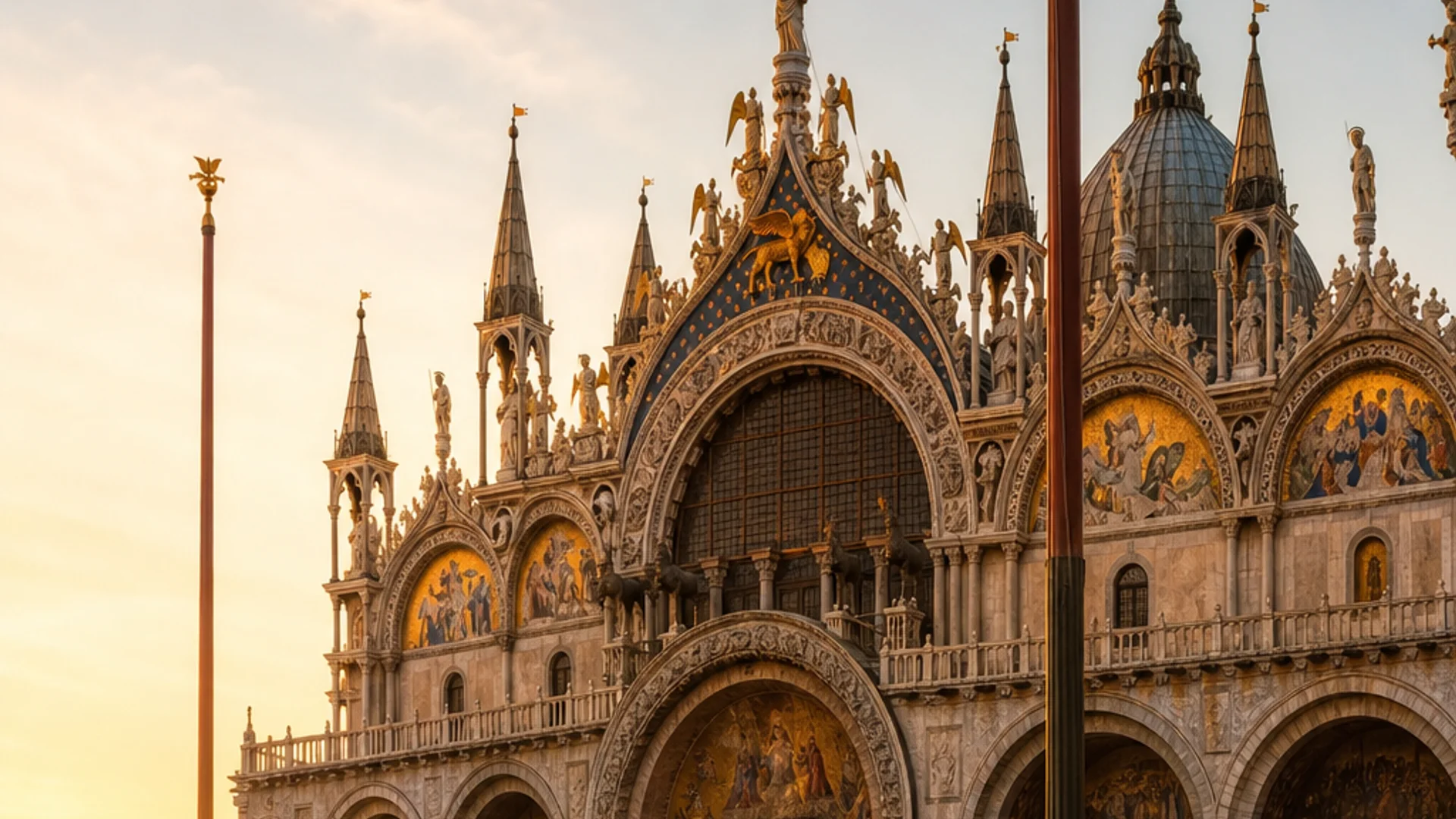
Venice rewards the traveler who does their homework and punishes the one who doesn’t. Most people picture an expensive, overcrowded maze , and they’re not wrong about the crowds. But here’s what surprises most visitors: the majority of Venice’s iconic sites have no entry fee at all. We put together this guide at Dream Book Travel to give you the real picture , what to see, what to skip, and how to time it all.
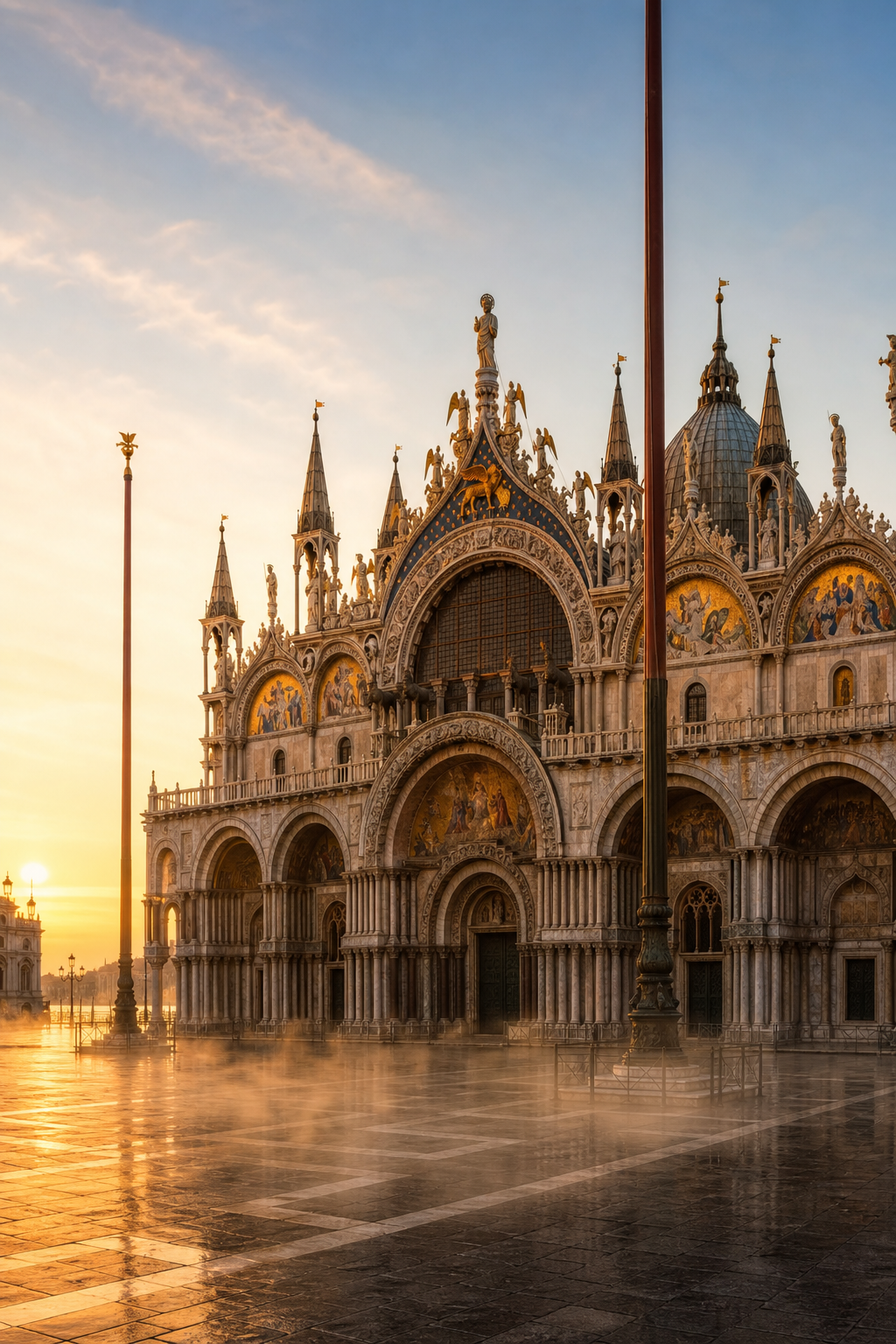
St. Mark’s Basilica is the spiritual and symbolic heart of Venice. Built in the 9th century to house the relics of St. Mark , one of the four gospel writers , the church spent centuries as the private chapel of the Doge before opening to the public. The Byzantine-style building is covered in mosaics that could fill two football fields, and the gold ceilings genuinely glow from within.
Inside, separate tickets get you into the Pala d’Oro , a medieval gold altarpiece encrusted with Byzantine enamel and precious stones, and still in its original setting. Above the main entrance, four bronze horses , the Cavalli di San Marco , date to around 300 BCE. Napoleon shipped them to Paris in 1797. They came back.
The recommended visit is 30 to 45 minutes, but most people spend longer. The real tip: book your slot online in advance to skip the queue entirely, or arrive when the doors open at 8 a.m. By 10 a.m., the square is a wall of people. Entry to the basilica itself is free; the Pala d’Oro and the museum each carry a small separate fee.
The one honest caveat: dress code enforcement is strict. Shoulders and knees must be covered. They will turn you away at the door.
The Doge’s Palace isn’t just impressive architecture. It’s the room where 2,000 Venetian aristocrats once gathered to decide the fate of an empire. The Great Council Chamber holds 32 panels by Tintoretto , including what is widely regarded as the largest oil-on-canvas painting in the world. Standing in that room, Versailles genuinely does feel like new money by comparison.
The palace was the seat of Venetian government for centuries. You’ll walk through rooms where councils decided war and trade, cross the Bridge of Sighs (the last view condemned prisoners had of Venice), and descend into the prison cells below. The standard recommended visit is 1 to 1.5 hours, though the Secret Itinerary tour , a separate booking that takes you through the administrative chambers hidden behind the public rooms , adds another hour and is worth it if history is your thing.
The palace runs extended summer hours on Fridays and Saturdays from May 1 through September 26, 2026, staying open until 11 p.m. A single ticket also covers several other civic museums in the San Marco area , solid value if you plan a full day there.
Skip the suitcases and rolling bags entirely. They won’t let them in, and there’s nowhere to store them nearby.
A gondola ride costs €110 at night. The vaporetto Line 1 covers the same Grand Canal for a single-ride ticket , and the view from the deck of a water bus at dusk is genuinely one of the best things you can do in Venice. Sit at the back or the bow, not in the middle, and you’ll have an unobstructed look at over two miles of palaces, churches, and crumbling façades.
The research gap between a traghetto crossing at €2 per person and a full gondola at €110 is about as wide as price gaps get in any city. The vaporetto lands somewhere in between and gives you far more distance. If you’re staying more than a day, Venice’s official public transit operator offers multi-hour and multi-day passes that cover unlimited rides on water buses and mainland buses across the city.
Multi-day passes are €35 for 48 hours and €45 for 72 hours. Single tickets are expensive per ride , so if you’re hopping between neighborhoods and islands, the pass pays for itself fast. Validate your ticket at the yellow machines on the dock before boarding. Inspectors do check.
The best time for the Grand Canal by vaporetto is late evening. Tourists clear out for dinner around 7 p.m., traffic on the water drops, and the light off the palaces shifts into something worth a few photos.
Pro Tip: Take Line 1 (not Line 2) for the Grand Canal. Line 2 is faster but skips most stops. Line 1 stops at every landing , you’ll pass the Rialto, Ca’ d’Oro, Ca’ Rezzonico, and the Accademia before reaching San Marco.
The Rialto Bridge is the most-photographed spot in Venice and the oldest bridge across the Grand Canal. There are only two other main bridges crossing the canal, so most tourists end up here anyway. The bridge itself is free. The views looking south toward the bend in the canal are genuinely excellent. But show up at noon and you’ll spend more time handling selfie sticks than looking at anything.
The Rialto Market, which spreads along the San Polo side of the canal below the bridge, is where Venice actually shops. Fishmongers, vegetable stalls, and a handful of stands selling things that are not souvenirs. It runs Tuesday through Saturday mornings and tends to wrap up by around noon. The market is worth seeing , it’s one of the few places in central Venice that still functions as a working neighborhood rather than a stage set.
Best-time guidance for the Rialto is consistent across sources: early morning on weekdays. If you want the bridge without a crowd for photos, 7:30 to 8:30 a.m. is the window. Go on a Tuesday or Wednesday if you can; weekends at the market pull more tourists. Crossing the bridge in both directions takes about 10 minutes. The shops on the bridge itself sell jewelry and tourist goods at prices that reflect the location.
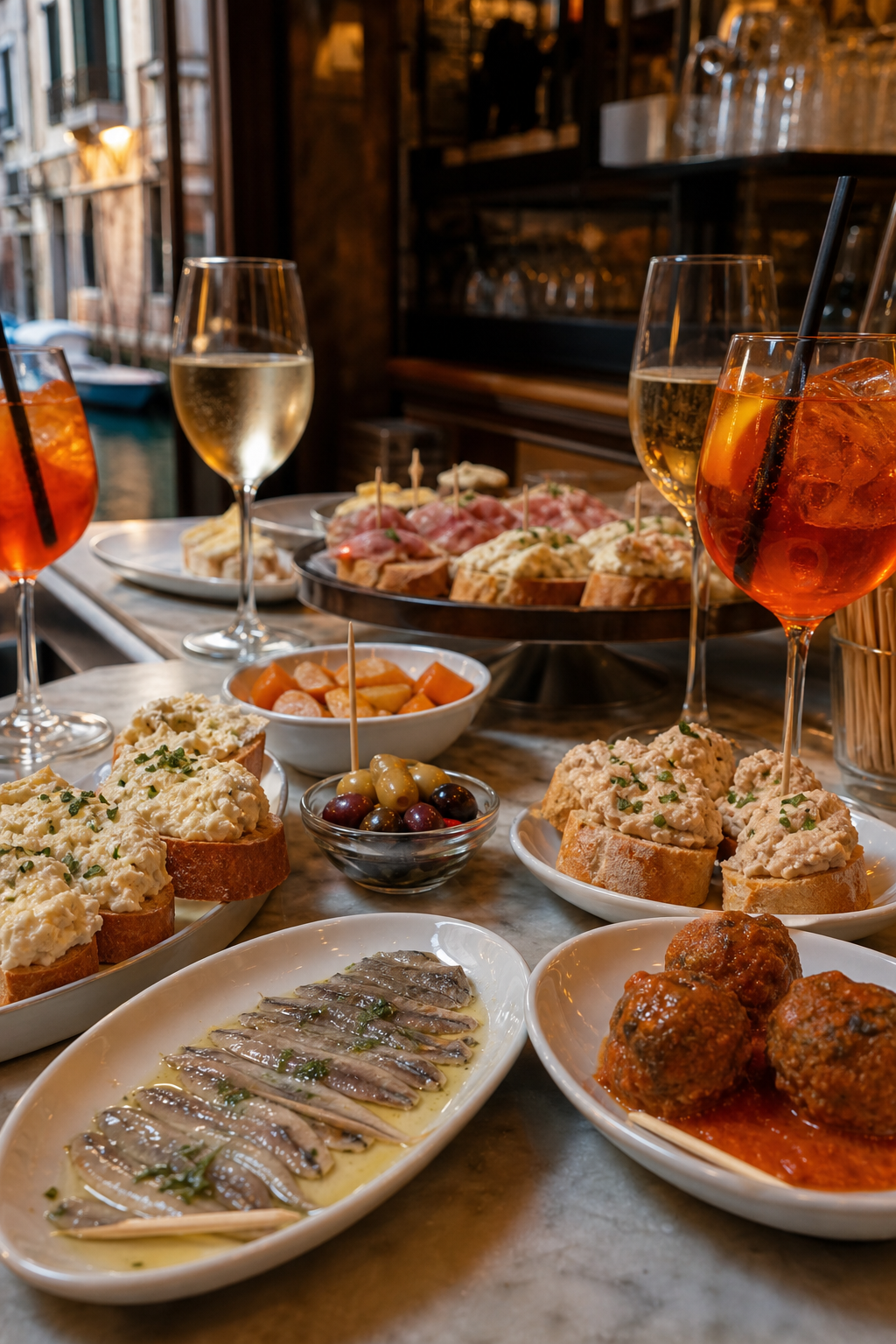
Cicchetti are Venice’s answer to tapas , small bites served at the bar, meant to be eaten standing up with a glass of local wine. A classic spread might include baccalà mantecato (whipped salt cod on bread), sarde in saor (sweet-sour marinated sardines), or polpette (small meatballs). The tradition started as a working-class meal and largely stayed that way in the right neighborhoods.
Cannaregio is the neighborhood that still does this with the most authenticity. Walk along the Fondamenta della Misericordia or the Fondamenta degli Ormesini on a weekday evening and you’ll find a string of bacàri , traditional Venetian wine bars , filling up with locals from around 5:30 p.m. onward. Cicchetti are priced affordably per piece, and a glass of house wine or spritz adds a small amount on top. Eat and drink well for under €15 per person without difficulty.
The timing matters. Sitting down for dinner at 6 p.m. at a restaurant that’s open and welcoming is a reliable sign you’re in a tourist trap , real Venice eats later, around 8 p.m. or later. The smarter move: do a cicchetti crawl along the Fondamenta between 5:30 and 7:30 p.m., then find a smaller restaurant for dinner once the tourist rush clears. You’ll eat better and pay less.
One honest note: the bars closest to the Rialto and San Marco charge significantly more for the same food. Go north into Cannaregio and the prices drop noticeably.
The Venetian Ghetto, established in 1516, was the first legally designated Jewish quarter in the world. The term “ghetto” itself comes from this neighborhood , from the Venetian word for the copper foundry that previously occupied the site. For almost three centuries, a Jewish community lived here, locked in at night, patrolled by guards, and taxed by the Republic in exchange for protection. What they built in that cramped space is remarkable.
The neighborhood sits in northern Cannaregio, and it’s noticeably quieter than the rest of the tourist circuit. Campo del Ghetto Nuovo is the main square , ringed by unusually tall buildings, the result of the community building upward when they couldn’t expand outward. Several synagogues survive here, each built by a different community (Ashkenazi, Levantine, Sephardic) and each architecturally distinct.
Guided tours run hourly in English from 10 a.m. Sunday through Thursday. A full-price museum and synagogue ticket is €12, with a guided tour adding €15. The museum covers Jewish life in Venice from the 16th century through the 20th. One date worth noting: September 6, 2026 is the European Day of Jewish Culture, and entry is free. On Saturdays and Jewish holidays the complex is closed entirely , check the schedule on the ghetto’s official site before you go.
Most visitors to Venice walk straight past this neighborhood. That’s their loss. Allow at least 90 minutes if you’re doing the tour.
The islands of the Venetian lagoon are worth a day trip. But they’re not equal, and combining all of them into one exhausting island-hopping marathon usually leaves people feeling like they rushed through everything and enjoyed nothing.
Murano is about 10 minutes from the Fondamente Nove by vaporetto (Line 4.1 or 4.2). It’s been the center of Venetian glass-blowing since the late 13th century , the Republic moved all the furnaces to the island to reduce fire risk in the city. You can watch glass-blowing demonstrations at several workshops. The quality varies widely; the better factories have scheduled shows rather than staged tourist performances. The island also has its own canal system worth a short walk. Budget 2 to 3 hours.
Burano is another 30 to 40 minutes beyond Murano by vaporetto. The colorful houses are genuine , fishermen’s tradition, each house painted a distinct color so owners could spot their home from the water. The island is smaller and more walkable than Murano, and the mood is noticeably more relaxed. Burano is famous for lace-making, though authentic handmade lace is rare and expensive; most of what’s sold in the shops is machine-made. That said, local museums do cover the real history of the craft.
If you can only do one island: most travelers find Burano more photogenic and more enjoyable as a half-day excursion. Murano is worth it only if you’re genuinely interested in glasswork. If you’re planning a broader European itinerary, check out the Dream Book Travel guide to Europe’s best destinations for context on how Venice fits into the larger picture.
Key Takeaway: Take Line 12 from Fondamente Nove for the full Murano, Burano route. The vaporetto pass covers both islands , no extra ticket needed.
Dorsoduro is the neighborhood where Venice stops performing for tourists and starts feeling like a real place. It’s home to two of the city’s best art destinations, a student population, and a stretch of canal-side bars that fill up with locals most evenings.
The Peggy Guggenheim Collection sits directly on the Grand Canal between the Accademia Bridge and the Salute church. It holds a serious collection of 20th-century European and American art , Picasso, Dalí, Pollock, Kandinsky , in what was Guggenheim’s home for the last 30 years of her life. The sculpture garden on the Grand Canal terrace is worth the ticket on its own. Saturday and Sunday at 3 p.m., the museum runs a free guided tour of the permanent collection in English. Last entry is at 5 p.m.
Beyond the Guggenheim, the Zattere is a long south-facing waterfront promenade with views across the Giudecca canal. On a sunny afternoon it’s where Venetians actually sit and do nothing for a while , something the San Marco side of the city makes nearly impossible. The neighborhood’s main square is the social hub: a wide square lined with coffee bars, wine bars, and a few grocery stalls, active from morning to late evening. It’s a useful base for eating and drinking at prices that don’t reflect the tourist premium.
If you’re traveling with limited mobility, Dorsoduro is one of the more navigable neighborhoods in Venice. A number of routes along the Zattere are flat and accessible. Travelers with wheelchairs or mobility aids should be aware that bridges throughout Venice typically involve steps , the vaporetto water buses are generally more accessible than walking routes, and having reliable equipment matters. Consulting a specialist mobility equipment resource before your trip is worthwhile if you rely on a manual chair.
Venice introduced a day-tripper entry fee that applies on select peak days. In 2026 this fee targets the highest-traffic periods , spring and summer weekends and holidays. If you’re staying overnight in a hotel within the historic center, you’re exempt (the accommodation tax covers it). If you’re arriving as a day visitor from the mainland on a designated date, you’ll pay the fee at a checkpoint near the main entry points. Check the city’s official calendar before you visit , the dates aren’t consistent across the whole season.
| Getting Around Option | Cost | Best For | Honest Trade-off |
|---|---|---|---|
| Single vaporetto ticket | Pricing varies by season | One or two rides | Expensive per ride; add up fast |
| 24-hour water bus pass | ~€25 | First full day of exploring | Worth it after 3+ rides |
| 72-hour water bus pass | €45 | Multi-day stay | Best value for most visitors |
| Traghetto crossing | €2 (cash only) | Quick canal crossing on foot | Cash only; only two crossing points |
| Gondola (daytime) | €90 | A special occasion | 35-minute ride; scenic but pricey |
| Gondola (evening) | €110 | Romance/nighttime canals | Less traffic; feels more peaceful |
On accommodation: Staying inside the historic center on the island is convenient and expensive. Staying in Mestre on the mainland , a 10-minute train ride from Venice Santa Lucia station , cuts accommodation costs significantly. Don’t confuse the two stations: Venice has two stops on the rail line. You want Santa Lucia (the end of the line, on the island). Passengers who miss it and get off at Venezia Mestre have to buy another ticket and backtrack. Pack light; the staircase at Santa Lucia with heavy luggage is a genuine inconvenience.
On tourist traps: Any restaurant in St. Mark’s Square with a host standing outside and a laminated photo menu is priced for tourists. A coffee at Caffè Florian will run €10 to €15 , what you’re paying for is the orchestra and the setting, not the espresso. Know what you’re buying before you sit down.
Venice rewards people who plan the non-obvious parts. Book the Basilica slot online. Get the 72-hour vaporetto pass on day one. Do the Ghetto and Dorsoduro on a weekday. Save cicchetti for the evenings. The stuff that needs timing , the guides won’t put in a bullet point, but it makes the difference between a great trip and a frustrating one.
The least-crowded time is November through early March, excluding the Carnival period in February. Weekday mornings in any season are manageable. If you’re visiting in peak summer, plan major sites like St. Mark’s Basilica and the Rialto for 8 to 9 a.m. The city is genuinely quieter after 8 p.m. when most day-trippers have left , evening walks through Cannaregio or Dorsoduro feel like a completely different city.
It depends entirely on how you eat and where you stay. Most major landmarks have no entry fee , the Basilica, Rialto, the Ghetto neighborhood , so sightseeing costs are lower than people expect. The main expenses are accommodation, the vaporetto pass (€45 for 72 hours), and food. A realistic mid-range daily budget eating cicchetti and one sit-down meal varies considerably per person depending on choices, not counting accommodation.
Yes, for two of them. St. Mark’s Basilica timed entry slots sell out, especially in summer , book online before you arrive. Doge’s Palace gets long queues; booking in advance saves 45 to 90 minutes of waiting. Everything else , the Ghetto, the Guggenheim, Dorsoduro bars, island ferries , can be handled on arrival, though confirming current hours before you go is always smart.
That depends on your budget and what you’re after. Gondola rides run €90 in the daytime and €110 in the evening for a standard 35-minute ride, and the rates are set , don’t try to negotiate below the official price. The evening experience is quieter, with less water traffic. If €90 to €110 feels like a lot for half an hour, a vaporetto at dusk on Line 1 covers the Grand Canal for a fraction of the cost and gives you a longer journey.
Cannaregio is the most livable neighborhood for visitors , it has genuine cicchetti bars, a local feel, and reasonable (by Venice standards) accommodation options. Dorsoduro suits people who want art access and a quieter evening scene. San Marco is convenient but expensive and crowded. Staying on the mainland in Mestre is the budget option , about 10 minutes by train , and perfectly functional, though you lose the island atmosphere.
Venice charges a day-tripper entry fee on designated high-traffic dates, primarily spring and summer weekends. The fee applies to visitors arriving without overnight accommodation on the island. If you’re staying in a Venice hotel, the local accommodation tax exempts you. The specific dates and current fee amounts are published on the city’s official tourism site , check before you travel, as the schedule changes each year.
Venice punishes the traveler who tries to see everything in a day and rewards anyone who slows down enough to find the city behind the crowds. Skip the midday rush at the Rialto. Eat standing at a Cannaregio bar. Walk Dorsoduro in the early evening. The version of Venice most people complain about is real , but it’s not the only version. The Dream Book Travel take: give it at least three nights. Two full days is the minimum to see it properly; a third day is when it actually starts to feel like somewhere you’ve been rather than somewhere you’ve passed through. Start with the Basilica early tomorrow morning.
Discover five off‑beat activities in Vienna—from secret museums to hidden nature spots—that give you a fresh, honest travel experience.
From UNESCO-listed Town Hall to the Schnoor quarter, here are the best things to do in Bremen, Germany — with real prices and honest verdicts.
Learn proven steps to find cheap flights to Europe in 2026, from flexible dates and price alerts to optimal booking windows and low‑cost airports.