15 Best Things to Do in Bremen, Germany
From UNESCO-listed Town Hall to the Schnoor quarter, here are the best things to do in Bremen, Germany — with real prices and honest verdicts.
Vienna does imperial grandeur better than almost anywhere. Vienna ranks among the best places to visit in Europe, making it a solid base for any itinerary. But once you’ve done Schönbrunn and the Hofburg, there’s a whole other city waiting. These five picks go well beyond the standard itinerary , and most of them won’t appear in the brochure rack at your hotel. At Dream Book Travel, we focus on the experiences that are genuinely worth your time, so here’s our honest shortlist.
The Third Man Museum is a private museum in the 4th district dedicated entirely to the 1948 film noir classic shot on location in Vienna. It’s one of the most specific, obsessively curated museums you’ll find anywhere in Europe , and almost no one outside film circles knows it exists.
The collection runs across 16 rooms and holds a substantial number of original exhibits. That includes around 83 international film posters, original screenplays, cameras used on set, and the actual zither played by Anton Karas for the film’s iconic score. In 2023, the museum also acquired the Elchinger gravestone, which appears in all three cemetery scenes in the film. It was moved to the museum permanently.
But the Third Man Museum isn’t just about the movie. Half of it functions as a serious historical exhibition covering Vienna under Nazi rule and the Allied occupation from 1945 to 1955. Original documents, photographs, and press clippings show what daily life actually looked like. It’s the kind of frank, uncomfortable history you won’t find displayed this directly at most of Vienna’s grander institutions.
According to the official Vienna tourism listing for the Third Man Museum, a standard adult ticket costs €12 (around $13). Public opening hours are limited , Saturdays only during the season , though private tours can be booked on other days. The museum also closes for winter; it shut from January through late March in 2026, so check the schedule before you go.
One honest caveat: if you haven’t seen the film, at least watch it the night before. The museum assumes familiarity, and it rewards it. Without that context, the 16 rooms of memorabilia lose about half their impact.
Getting there is easy. Take the U4 to Kettenbrückengasse or tram line 1 to Paulanergasse. The entrance is on the corner of Preßgasse and Mühlgasse.
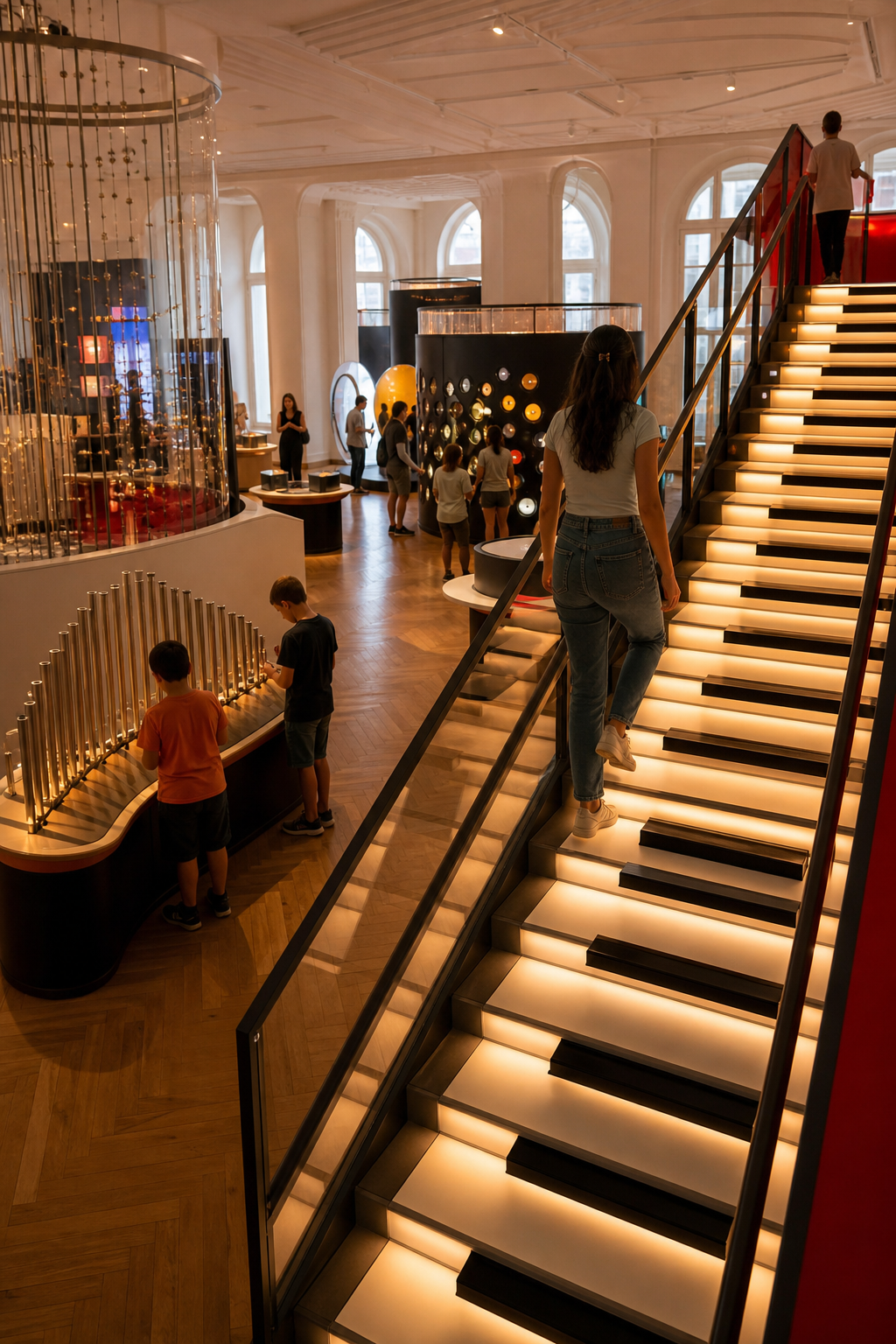
This sound-focused installation is located in a historic palace in Vienna’s old city center. Four floors explore the physics of sound and the legacy of Viennese music, offering an interactive approach rather than a traditional museum experience.
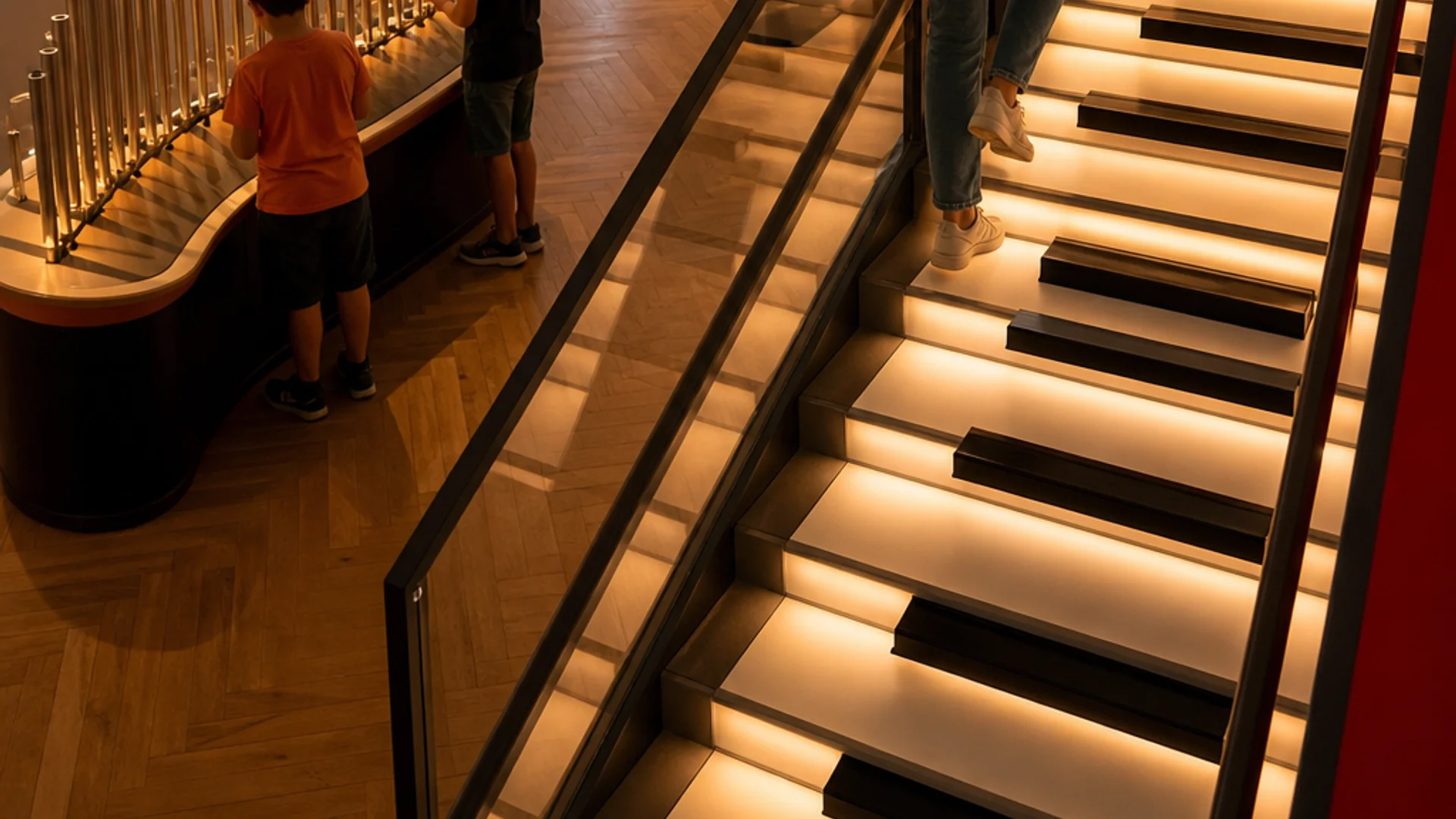
The staircase at the entrance doubles as a piano. Each of the 13 steps is movement‑sensitive and lights up the corresponding note on a wall panel when you step on it. One floor up, visitors can try conducting a virtual orchestra via a video projection; the visual responds to the user’s rhythm.
There’s also a virtual reality installation that lets you animate a Mozart portrait, and a Waltz Dice Game based on an actual Mozart composition (KV 516f). The first floor includes an archive of historical music documents, such as early concert programs and photographs.
Admission fees are moderate and vary; check the venue’s website for current rates. The venue stays open until 10 pm every day, making it a good option for evenings when most of Vienna’s other attractions have closed. It’s fully accessible, with no steps on the route to any exhibition room.
If you’re planning a Vienna trip in January, this sound experience installation is one of the best indoor options, warm, genuinely engaging, and open through winter when some of the city’s smaller museums take a break.
Pro Tip: Go on a weekday evening. The crowds thin out after 7 pm, and you’ll get the conductor installation almost to yourself, which is when it’s actually fun rather than a spectacle for someone else’s Instagram.
A historic cemetery in Vienna holds the graves of many renowned composers in close proximity. While Mozart’s actual burial site is elsewhere, his monument can be found here alongside the resting places of Beethoven, Schubert, Brahms, and Johann Strauss II.
What makes this unusual isn’t just the famous names. The site spans a sizable area and contains a large number of graves, making an unplanned visit feel a bit overwhelming. A guided tour provides focus. Several operators offer themed walks covering the composer section, the presidential vault, the Jewish section (one of the most significant surviving Jewish cemeteries in Central Europe), and architecturally striking private tombs from the late 19th century.
Entry to the grounds is free. Guided tours vary in price depending on the operator and duration, so check current rates directly when you book. The cemetery is open daily and is reachable by tram from the city centre, which drops you at the main gate.
One thing the guides won’t always mention: the site also serves as a neighborhood park for locals. On weekends you’ll see Viennese families cycling the main avenues, elderly couples on benches, and dog walkers. It’s not morbid—it’s actually one of the more relaxed green spaces in the city.
If you’re building a longer Central Europe itinerary, Vienna pairs well with a side trip to Bratislava. Our guide to day trips from Bratislava covers the Vienna connection in both directions, with real transit costs and honest verdicts on what’s worth the travel time.
The video above covers seven of Vienna’s most unusual museums, including the Torture Museum, the Esperanto Museum, and the Globe Museum, and is worth watching before you finalize your itinerary. Several of these have free admission, which aligns with what our research found: many of Vienna’s most unusual experiences are also the least commercialized.
Vienna offers several expansive green spaces along the river that serve as the city’s main outdoor escape, reachable from the centre in a short tram or subway ride. Many visitors overlook them, which is a missed opportunity.
These areas feature extensive trail networks for cycling, running, and skating, as well as natural bathing spots, modest water‑sport facilities, and family‑friendly beaches with shallow water. Some locations even include floating play structures.
Bike rental is typically available on‑site, with operators near the main entrances. Prices vary by bike type and duration, so checking current rates on arrival is advisable. No advance booking is required for a standard day rental.
The city’s official website lists these parks as open year‑round and free to access; you only pay for equipment rental or optional activities.
The honest trade‑off: popular spots can become busy on hot summer weekends. Visiting on a weekday morning in July or August helps avoid crowds. The quieter northern sections retain a more natural riverbank feel.
Key Takeaway: Vienna’s riverfront green spaces let you spend a half‑day outdoors for little cost, with free access and convenient public‑transport connections.
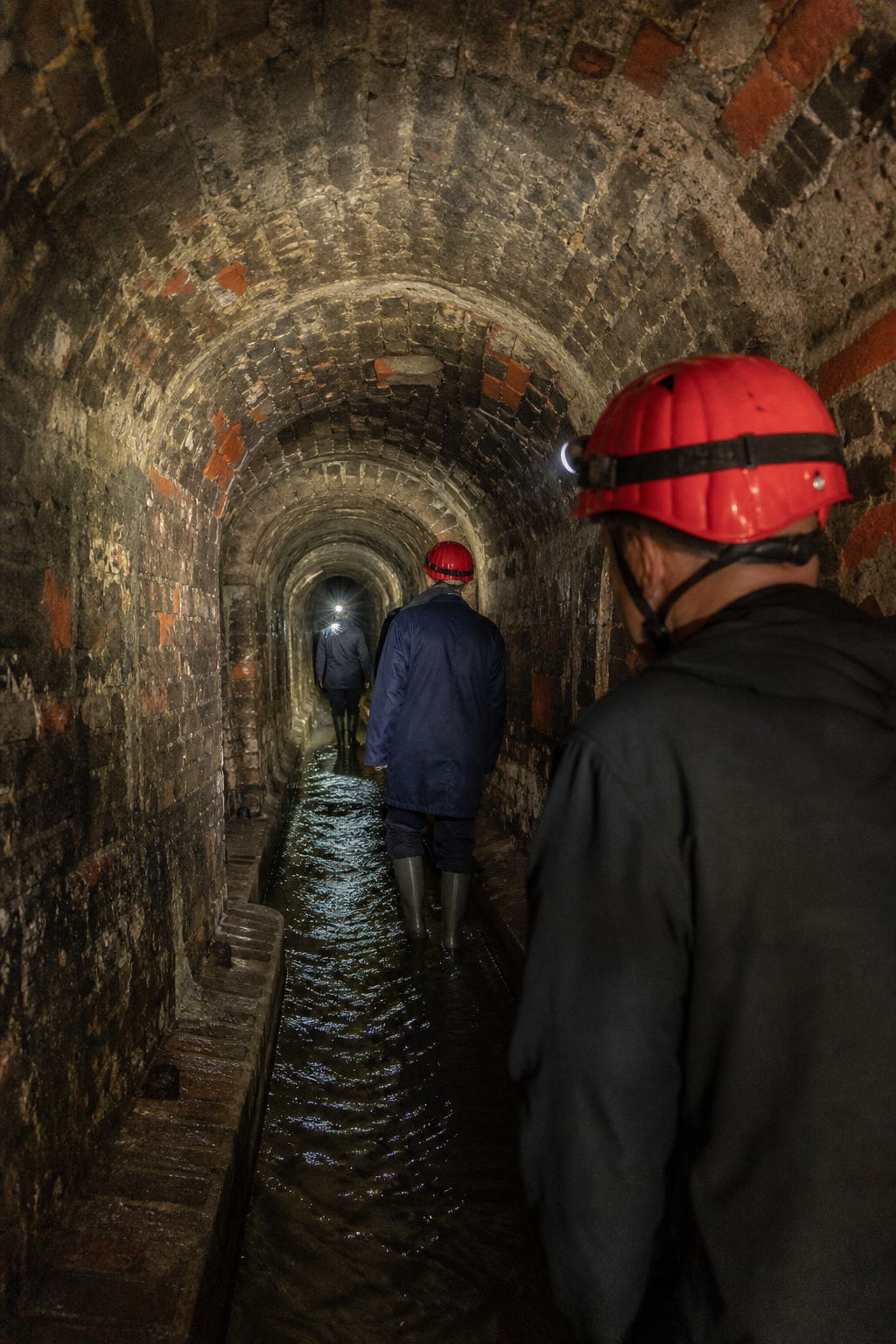
Vienna’s sewer system became famous worldwide through the 1948 film The Third Man, specifically the chase scene where Orson Welles runs through the tunnels as Harry Lime. Today, you can actually go down there. Two distinct experiences exist, and they’re quite different in tone.
The first is an official historical tour, which runs from May through October. It takes visitors about seven meters below street level, starting near Karlsplatz. You receive a safety helmet, a headlamp, and a guide who covers both the history of Vienna’s wastewater system and the film’s production. The tour ends with a view of the River Wien flowing underground. Tickets are available through local ticketing platforms. Minimum age is 12.
The second option is run by a local tour operator and goes in a different direction entirely. Instead of the sewer canal, this tour takes you through private, multi‑story historic cellars in the 1st district, some of which served as air‑raid shelters during World War II. Tour lengths run from 75 minutes to two hours. The two‑hour version visits three separate cellars, ranging from restored rooms to genuine lost‑place spaces. Temperatures inside stay around 16 to 18 °C regardless of the season, so bring a layer.
Neither tour is suitable for visitors with mobility limitations, and the cellar tours require sturdy closed‑toe shoes because the terrain is uneven. Photos are allowed in all cellars on the alternative tour. Meeting points vary by tour option, so check the booking confirmation carefully.
If you enjoy this kind of off‑grid urban exploration, the broader Central Europe region has more of it. Our guide to the best places to visit in Europe flags several cities with strong underground history scenes, including Prague and Bratislava.
One thing worth saying directly: these tours sell out, especially on weekends in summer. Book at least a few days ahead. Walk‑ins are not accepted on either tour.
Here’s how the five experiences stack up across the factors that actually matter for trip planning.
| Experience | Approx. Cost | Best For | Seasonal Limits | Advance Booking |
|---|---|---|---|---|
| Third Man Museum | €12 adult | Film fans, history readers | Closed Jan–Mar; Sat only (public) | Recommended for private tours |
| Music museum | €19 adult / €15 reduced | Families, music lovers, rainy days | Open year-round, until 10 pm | Not required |
| Historic cemetery tour | Free entry; tour price varies | History walkers, classical music fans | Open year-round | Recommended for guided tours |
| River island bike activity | Free access; rental rates vary | Outdoor days, families, cyclists | Best May–Sept; open year-round | Not required |
| Underground sewer tour | Varies by operator and duration | Urban explorers, history buffs | May–Oct only | Mandatory — no walk‑ins |
A few patterns worth noting. Four of the five experiences either have free access or low entry costs, which matches what we found in our research: Vienna’s most unusual activities tend to be the least commercialized. The underground tours are the exception, they’re ticketed, time‑limited, and require planning. The Third Man Museum is the only one with a significant seasonal closure, so if you’re visiting in winter, prioritize the music museum and the historic cemetery instead.
For travelers who want to pack jewelry or valuables safely on a trip like this, it’s worth having a reliable travel jewelry case; underground tours and active days on the river island aren’t the best environments for anything loose in a bag.
The Third Man Museum, the composer graves at Vienna’s historic central cemetery, and the underground cellar tours offered by local operators are all genuinely off the standard tourist path. Most visitors stick to Schönbrunn, the Belvedere, and the Opera, which means these five options are rarely crowded. Vienna also has several free unusual museums including the Esperanto Museum and the Chimney Sweep Museum that almost nobody lists in travel guides.
The official Third Man Tour near Karlsplatz may offer a discount through city tourism passes. Standard pricing is available on the tour operator’s website. The separate underground cellar tours have different pricing depending on tour length (75 minutes to 2 hours); check the provider’s site directly for current rates, as pricing is not publicly listed in fixed form.
It’s genuinely worth a half‑day, especially if you rent a bike. The island stretches about 21 kilometers with cycling trails, natural swimming areas, a water playground with free admission, and a kayak course. Access is free. It’s the kind of place Viennese locals use every weekend but visitors almost never find on their own. Weekday mornings are quieter; summer weekends get crowded near the main beach zones.
Yes. Entry to the historic central cemetery is free. The river island is free to access. The Esperanto Museum has free admission according to the City of Vienna. Vienna’s subway stations also host regular live music performances by registered U‑Bahn Stars, with a public schedule online. The first Sunday of each month offers free entry to many of Vienna’s museums, including the Beethoven Museum.
Yes, and this is not optional. Both the Third Man sewer tour and the local underground cellar tours require advance reservations; walk‑ins are not accepted on either. The Third Man Tour runs only from May through October. Book at least a few days ahead in summer, and a week or more ahead on weekends. Tickets are non‑refundable on the cellar tours, so confirm your dates carefully before booking.
The Esperanto Museum has free admission. The Fire Department Museum in the city center is also free year‑round. Vienna’s Clown and Circus Museum and the Fishery Museum are similarly free. For visitors under 19, most museums in Vienna are free regardless of the day. On the first Sunday of each month, many major museums including the Military History Museum offer free entry to all visitors.
Vienna rewards the traveler who looks past the obvious. The five experiences above are specific, bookable, and genuinely different from the standard itinerary, and most of them won’t cost you much. Start with the one that fits your travel style: the Third Man Museum if you love film and modern history, a music‑focused interactive museum if you’re traveling with family or want a full evening activity, a historic cemetery offering peaceful open space if you want a free half‑day that’s quietly remarkable. At Dream Book Travel, our job is to give you the honest shortlist, not the longest one. These five earn their spots.
From UNESCO-listed Town Hall to the Schnoor quarter, here are the best things to do in Bremen, Germany — with real prices and honest verdicts.
From St. Mark's Basilica to cicchetti bars and island day trips, here are the best things to do in Venice — with real prices and honest verdicts.
Learn proven steps to find cheap flights to Europe in 2026, from flexible dates and price alerts to optimal booking windows and low‑cost airports.